
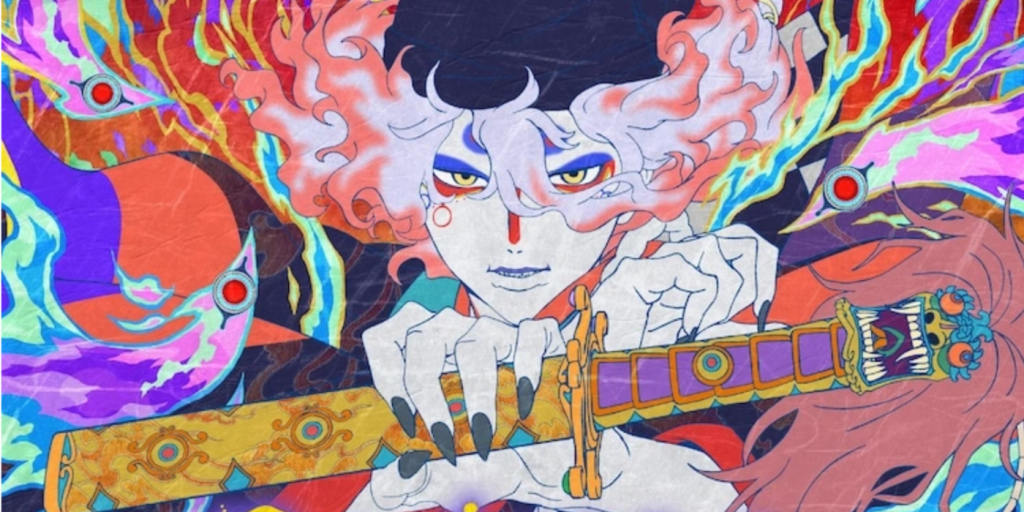
[Quick Editor’s Note: It’s October, which means it’s been Halloween since about August. Since I did the Horror-themed Mononoke anime series last week and wanted to follow up with the movie trilogy this week, I kinda accidentally set a precedent of doing Horror-themed recommendations that I may as well run with. It’s seasonal/topical, after all.]
[Note to self: watch more Horror movies…]
Anime series getting movies isn’t exactly uncommon – just of the top of my head, Dragon Ball, Naruto, Fullmetal Alchemist, and Demon Slayer all got somewhere between one and a couple dozen.
That Mononoke got a movie trilogy is pretty surprising, though.
It’s a fairly obscure series that I don’t think has ever been more than a cult classic, it’s not mechanised or marketed to the anywhere near the extent of the aforementioned series are, and given how difficult to follow the storylines can be, I don’t imagine it has a lot of mainstream appeal.
And yet, here we are…
Of course, I’m a big enough Mononoke fan that more Mononoke is a good thing.
As you could probably guess…
To address one of the potential big sources of confusion: Yes, that is a different Medicine Seller. The Medicine Seller from the TV series (and presumably also from Ayakashi) was the wielder of the sword Ri. This Medicine Seller is the wielder of Kon.
“Ri” and “Kon” have subsequently become nicknames for the Medicine Sellers themselves.
That shouldn’t be a spoiler. Kon comes right out and says that he’s one of 64 Guardians wielding 64 swords that correspond to the 64 hexagrams of the I Ching, a hugely influential Ancient Chinese manual of divination.
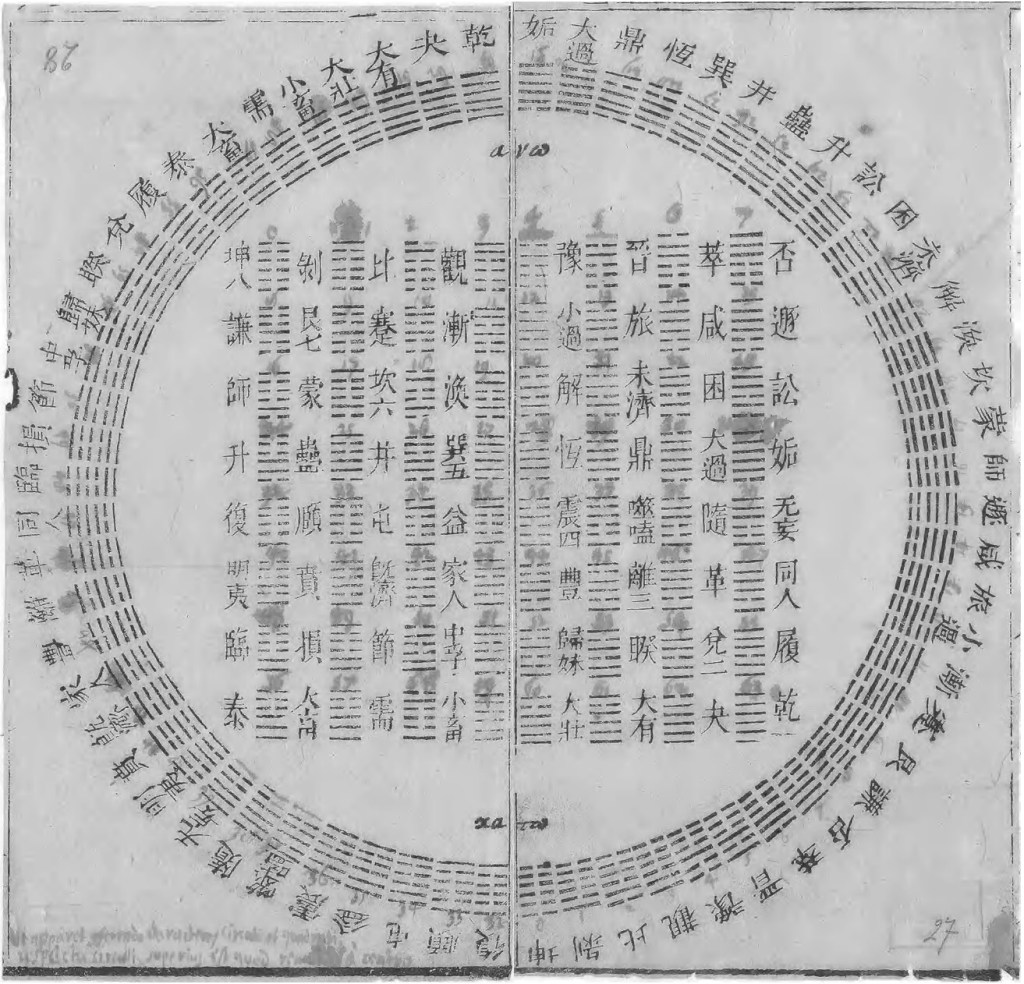
Incidentally, a new Mononoke series, introducing a third Medicine Seller has since been announced:
This one is known as the “Northwest Medicine Seller” – beyond the 64 corresponding to the variations of the I Ching, the eight strongest correspond to one of the eight directions, which I would think means they’re meant to at least evoke the Buddhist deities who do the same.
Due to not speaking Japanese, I’ve having a little trouble parsing what exactly is happening in the trailer, but based on Crunchyroll’s article about the announcement, Ri and Kon are the South and Southwest Medicine Sellers…
Also, I don’t think it’s ever been explicitly stated that all 64 Guardians are Medicine Sellers, but so far, we’re three-for-three…
Ahem.
Getting back to the matter hand, much like Ri, Kon has a propensity for popping up out of nowhere just as Mononoke start becoming active.
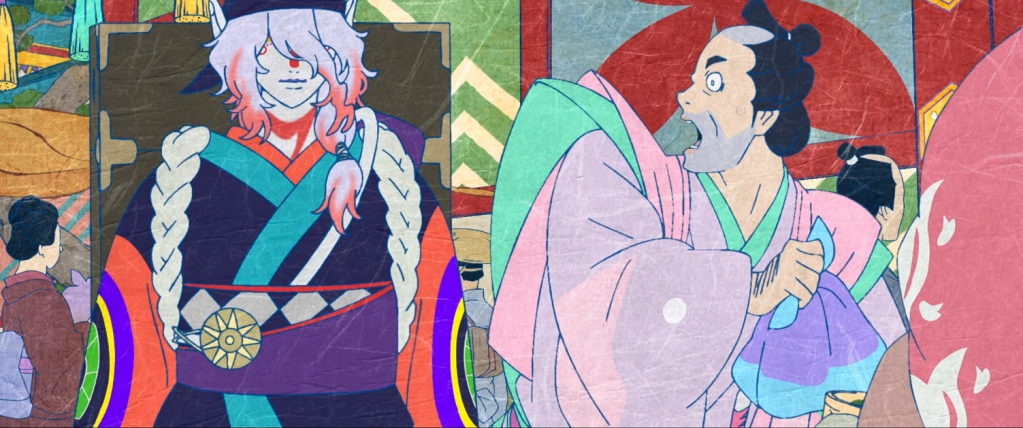
Mononoke the Movie: The Phantom in the Rain – EOTA and Twin Engine.
On the whole, Kon is a bit more animated, playful, and personable than Ri. He’s played by a different voice actor in both Japanese and English – which itself didn’t necessarily mean anything in terms of them being different characters, as the original voice actor in Japanese was blackballed for getting caught up in a sex scandal.
It also doesn’t necessarily mean anything in English either, as the dub of the TV series and the movies were done by different studios.
It is established that they’re two different characters – to the point that Ri does have a cameo in Curse of the Serpent. That shouldn’t be a spoiler. It was in the trailers and the trailers didn’t really give away any of the context of Ri’s appearance…
Our story begins as Kon shows up just outside the gates of the Ōoku, the Imperial harem. Admittedly, I’m a little confused by the terminology being used. I’ve only ever heard the term Ōoku used to refer to the Shogun’s harem. I don’t know enough about the social organisation of Feudal Japan to know if the Emperor’s harem was also called the Ōoku. but I don’t suppose it really matters.
Ultimately, I think they’re conflating and/or combining the Shogun and the Emperor. The movie treats him like a divine sovereign (like the Emperor), but it also says his dynasty has ruled for 150 years — consistent with the Tokugawa Shogunate and the general setting of the franchise in the Edo Period and not applicable to the Imperial dynasty which is said to have existed since 660 BC and is historically verifiable as far back as at least AD 539.
Again, the details aren’t particularly important. The significant bit is that being a powerful man’s concubine kinda sucks.
In hindsight, Mononoke is actually a pretty feminist series. The bulk of the Mononoke themselves are either the spirits of women who were victimised in life or else the result of social injustices targeting women. And that still holds up in the movie trilogy. I saw someone on Reddit sum up the through plot of the trilogy by saying that the real villain of the trilogy is the Ōoku itself.
And, yeah, that tracks.
Each of the three movies functions like a story arc of the original TV series and runs about as long as the multi-episode arcs did, with Kon unravelling the mystery surrounding the Mononoke that literally haunts each movie, which really only reinforces the idea that the Ōoku is the real villain, or at least the driving factor before the string of injustices that gave rise to the Mononoke.
Without getting too deep into spoilers – and I don’t think this even is a spoiler if you know anything about how harem politics tended to play out historically – the movie trilogy’s Mononoke were invariably created by the suffering and grief caused by the ruthless manoeuvring and social climbing happening within and the stifling protocols governing the Ōoku.
I’m sure it would be an even more powerful statement if I had a better grasp of how the real Ōoku worked.
Each of the three movies kinda-sorta works as a standalone story, but there is significantly more continuity between them than any of the story arcs of the TV show. Notably, there are background characters who are clearly important introduced in the first movie, Phantom in the Rain, whose roles are never explained fully until the third and final movie, Curse of the Serpent.
Granted, that fits pretty well with the precedent of the TV show for not giving the audience much to work with.
The overall story arc is about the imminent birth of the Emperor’s new child, with particularly importance placed on the consequences of that child being a son. Even in the present day, the Imperial line of Japan still only passes to male heirs. This means that the current Emperor, barring changes to laws that ultimately seem pretty unlikely, will be succeeded by this brother instead of his daughter.
The second movie, Ashes of Rage feels like the easiest to follow, especially compared to Phantom in the Rain which I had to watch two or three times to really feel like I grasped. On the flipside, it does also feel like Ashes of Rage does sort of jettison and ignore a lot of what was set up in Phantom of the Rain – though like I said, that particular needle is at least mostly threaded when Curse of the Serpent comes around.
Look, just watch all three of them. They’re awesome, and even if (when?) you’re completely lost, they’re absolutely gorgeous.
You probably don’t need to watch the TV series before watching the movies. Kon explains the whole Truth, Form, Reason thing at least once a movie. Ri’s cameo in Curse of the Serpent may cause reactions of ‘Wait. Who’s that guy?’ but, on the other hand, given that Kon mentions the 64 Guardians thing several times, even people with no familiarity with the franchise can probably glean that he’s one of the other 63.
Visually, the movie trilogy is Mononoke at its best. Twenty years of advancement to animation techniques and technology and a presumably bigger budget will do that. Notably, whereas Ri pretty much just drew his sword and went straight to ‘I Win’ mode and dispatched the Mononoke, Kon actually gets some pretty awesome fight scenes.
Granted, they may be to indicate that Kon is contending with significantly more powerful Mononoke. Given that he’s operating at the very centre of Imperial power and prestige and scheming, that might make sense. Realistically, though, I think what it actually represents is the producers going ‘Look how big our budget is.’ There are a lot of sequences that really remind me of the Persona games at their most abstract, stylish and trippy.
Which fits, in a way. Persona has also always been predicated on some pretty scathing social critique.
The opening theme of the original series was a jarringly anachronistic almost lounge-music song. The movie trilogy runs with deliberately anachronistic music as well, combining some fairly traditional Japanese instruments with modern rap and pop music. And some of the background music actually sounds modern and Synthy enough that it actually reminds me of Mass Effect.
For reference, the theme song for Phantom in the Rain is this:
The Mononoke movie trilogy is streaming internationally on Netflix.
Now, a quick reminder that I am a professional writer and editor, and if you’re in need of writing and editing support, please consider taking a look at the work and rates currently offered by Emona Literary Services™ and reach out if you think I can help you.
Please consider supporting Emona Literary Services™ to help me expanding my publishing and content creation projects, via Patreon, Ko-fi, or directly through Paypal by scanning the QR code below:

You can follow me on my various social media platforms here:
© Joel Balkovec — Published by Emona Literary Services™.

This work is licensed under a Creative Commons Attribution-NonCommercial-NoDerivatives 4.0 International License.
The author prohibits the use of content published on this website for the purposes of training Artificial Intelligence technologies, including but not limited to Large Language Models, without express written permission.
All stories published on this website are works of fiction. Characters are products of the author’s imagination and do not represent any individual, living or dead.
View the Emona Literary Services™ Privacy Policy here.


Leave a Reply