
I was in Newfoundland in August, specifically in and around St. John’s, which is the location of The Rooms – the amalgamated provincial museum, art galley, and archives.
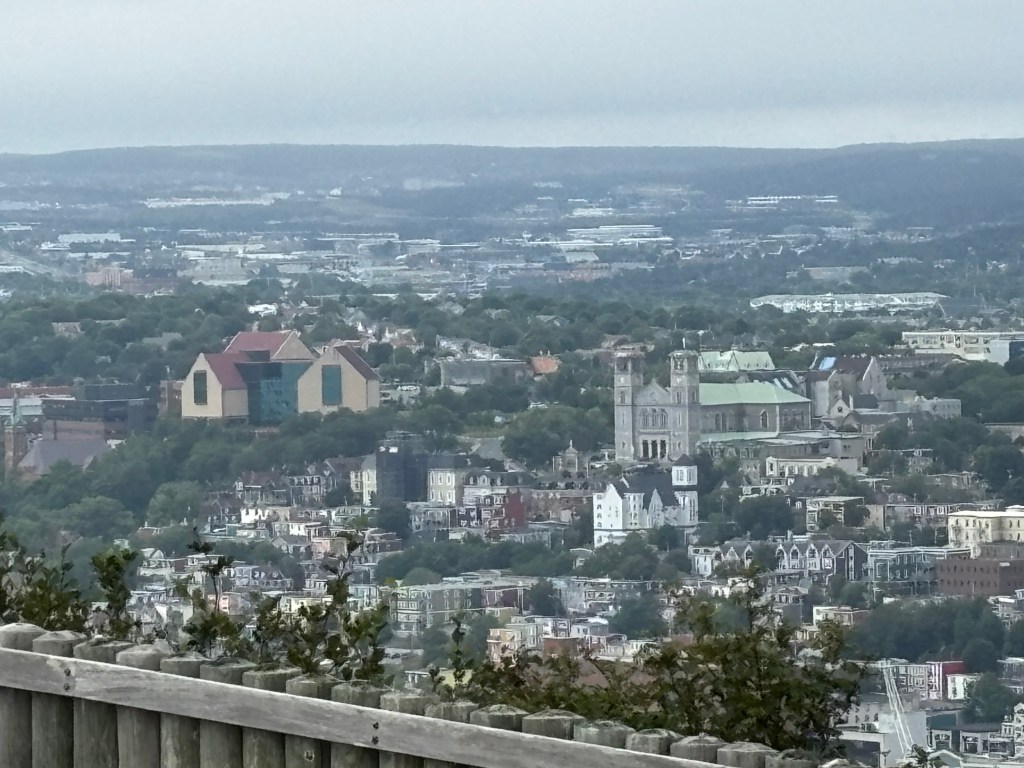
Photo by me.
There’s a section devoted to the natural history of the province – primarily the wildlife (including a pretty awesome preserved giant squid), but also including information above human habitation in the province from the Indigenous peoples, the brief Norse settlement (famously attested to at the L’Anse-aux-Meadows, the arrival of the Basques, French, and English.
There’s also an entire wing devoted to the history of the Royal Newfoundland Regiment and its service during World War I.
That was probably my favourite part of the Rooms. When I was taking the mandatory Canadian History course in high school, we didn’t learn that much about World War I and we especially didn’t learn that much about the Newfound perspective – Beaumont-Hamel came up in passing, and Vimy Ridge probably got the most attention, due to it being seen as the finest hour of the Canadian Expeditionary Force.
And, so, seeing the Newfoundland perspective on the Regiment was really illuminating and really sobering.
If you’re not up on the history of Canada and especially Newfoundland, keep in mind that Newfoundland was not part of Canada until 1949. At the outbreak of World War I, Newfoundland was a British dominion – functionally autonomous but still considered as part of the British Empire – with a population of about 240,000.
For reference, Canada was also a dominion in 1914, but had a population of about 8 million.
Despite being small, remote, largely rural, and not having had any real military structure since 1870, when Britain declared war in 1914, enough Newfoundlanders quickly enlisted to raise a full regiment. Which would go on to fight on some of the bloodiest battlefields of the War and suffer some of the worst casualities.
As such, the history of the Regiment is both a pretty major source of both pride and sorrow for Newfoundlanders.
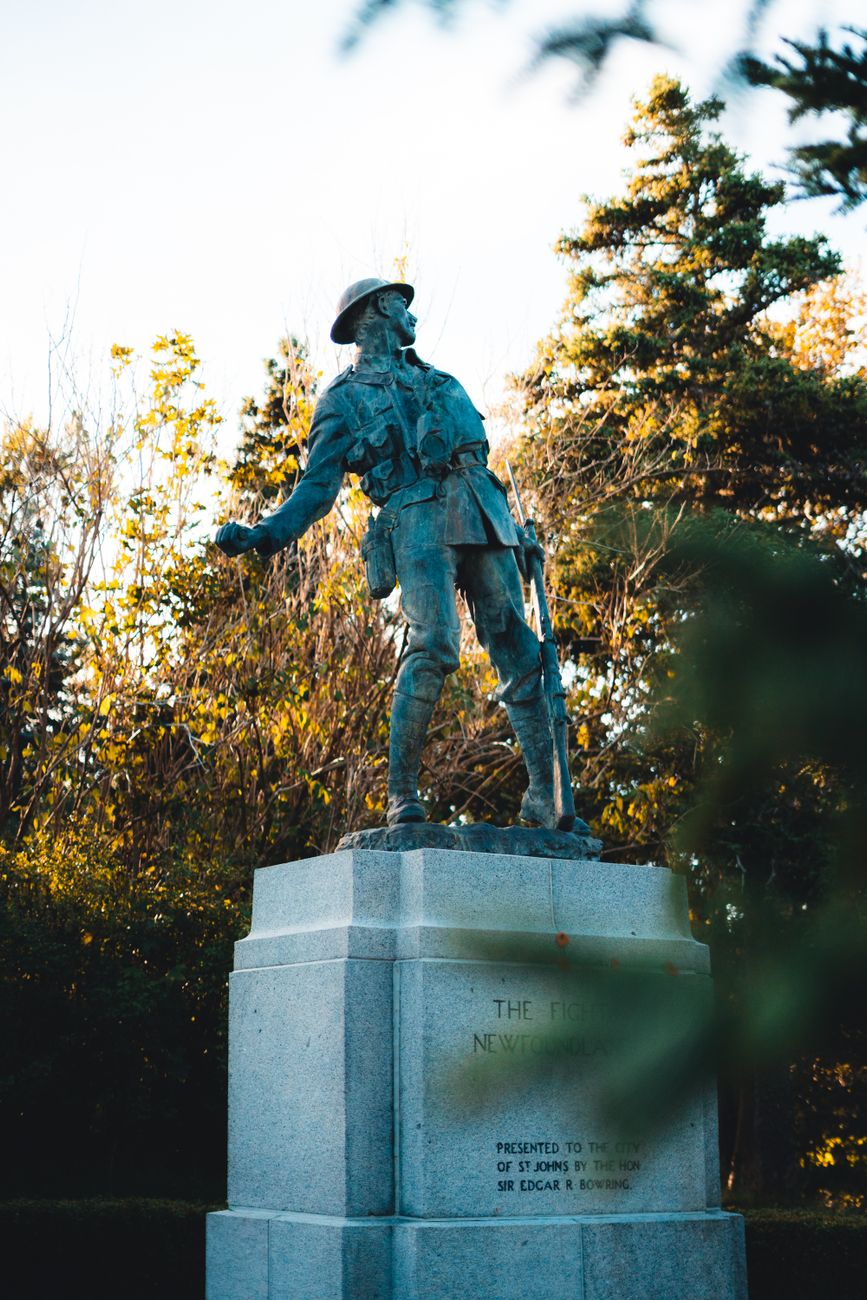
Photo by Erik Mclean on Pexels.com
The Regiment first saw action at Gallipoli. While the Gallipoli Campaign is most associated with the ANZACs, the Australian and New Zealand Army Corps (as portrayed in the Mel Gibson movie), the Newfoundland Regiment was also part of the British force invading Gallipoli.
Gallipoli is likely one of the most well-known debacles of the War, with the British invasion force accomplishing little despite heavy casualties (as portrayed in the Mel Gibson movie) and ultimately abandoning their beachhead and withdrawing – causing the invasion’s major proponent in the British government, Winston Churchill, to resign from the Admiralty in disgrace.
However, the Newfoundland Regiment performed well enough to be tasked with the rearguard during the withdrawal.
After Gallipoli came the Somme, which was gone down in history as one of the bloodiest battles in human history.
The Newfoundland Regiment was stationed at Beaumont-Hamel, part of the British force attempting to take a German position known as the Hawthorn Ridge Redoubt. With the rest of the British forces at Beaumont-Hamel either bogged down and unable to advance or confused and unaware of what was happening elsewhere on the front, the Regiment was the only British force advancing and thus the one obvious target for the German defenders.
This is the point of the of the exhibit in the Rooms that shook me most. Beauvoir De Lisle, the British general in charge of the forces at Beaumont-Hamel summed up the Regiment’s performance as follows:
It was a magnificent display of trained and disciplined valour, and its assault only failed of success because dead men can advance no further.
As a result of the failed assault at Beaumont-Hamel, the Regiment lost all of its officers and 658 enlisted men – 110 survived and only 68 were fit to answer roll call the next day.
Despite this, the Regiment was reinforced and continued to fight through to the end of World War I, and the militia that was raised at the outbreak of World War II was designated as the Newfoundland Regiment during the War. The Royal Newfoundland Regiment continues to exist as part of the larger Canadian Army, most recently participating in Canadian peacekeeping missions, Canada’s involvement in Afghanistan, and humanitarian aid and disaster relief.
Which brings us to Great Big Sea – whom we’ve met before.
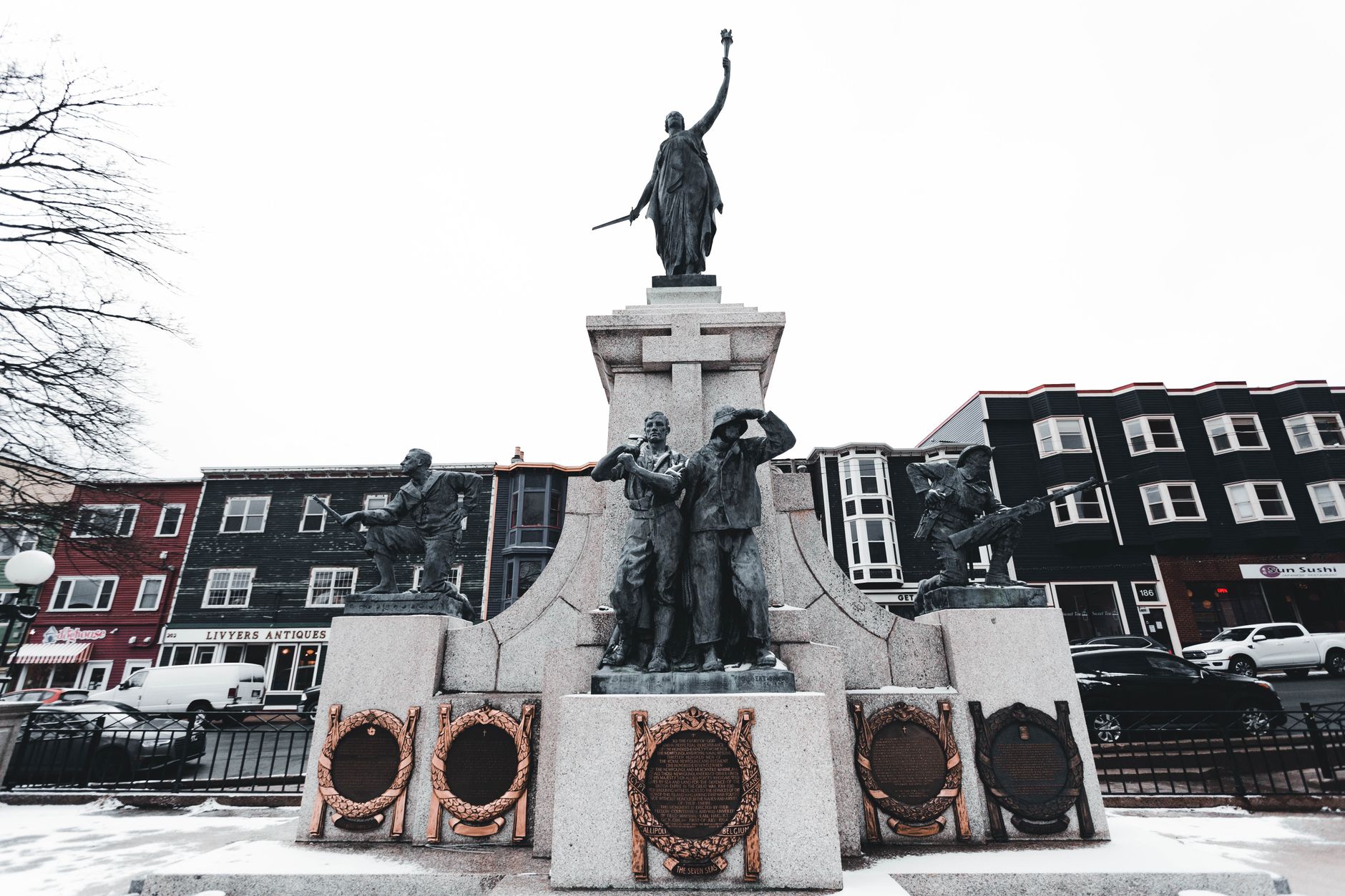
Photo by Erik Mclean on Pexels.com
Given that, essentially, Great Big Sea is famously from Newfoundland and famous for being from Newfoundland, it’s not surprising that they would have a song about such a defining part of Newfoundland’s history.
Recruiting Sargeant is notably more sombre and introspective than the typical Great Big Sea song. Given the subject matter, that’s not surprising, either.
Similar in tone and theme to both the Scottish ballad Twa Recruiting Sergeants and the Napoleonic-era song Over the Hills and Far Away (associated with the Sharpe TV movies), Recruiting Sergeant is another – well, I’m not sure if it’s actually a patriotic song, but it’s certainly a song about patriotic fervour to go on a grand adventure to fight for King and Country.
I am unclear to what, if any, extent Recruiting Sergeant is directly based on those songs. According to Wikipedia, it’s based on a song from a play called The Recruiting Office, but I’m unclear what exactly that means, given that the play in question was written in 1706…
But then the song itself sort of gets disillusioned with the whole idea of war as a grand adventure, in much the same way the people watching a generation of young men get slaughtered did.
The song goes from “So it’s over the mountains, and over the sea/Come brave Newfoundlanders and join the Blue Puttees” to “To the trenches with the regiment, prepare yourselves to die,” ending with a sense lingering sorrow and regret: “The stone men on Water Street still cry for the day/When the pride of their city went marching away. “
[Lyrics via Genius.]
A couple of notes for the benefit of those of you not too familiar with Newfoundland’s history: the Regiment was called the Blue Puttees because the leg-covers of their uniforms were made of blue fabric because there was a shortage of khaki fabric at the time, Water Street is the core of downtown St. John’s and the ‘stone men’ are the figures on the War Memorial.
To wrap this up, the one thing I really wanted as a souvenir from this Newfoundland trip was a jersey from the Regiment, Newfoundland’s current junior hockey team.
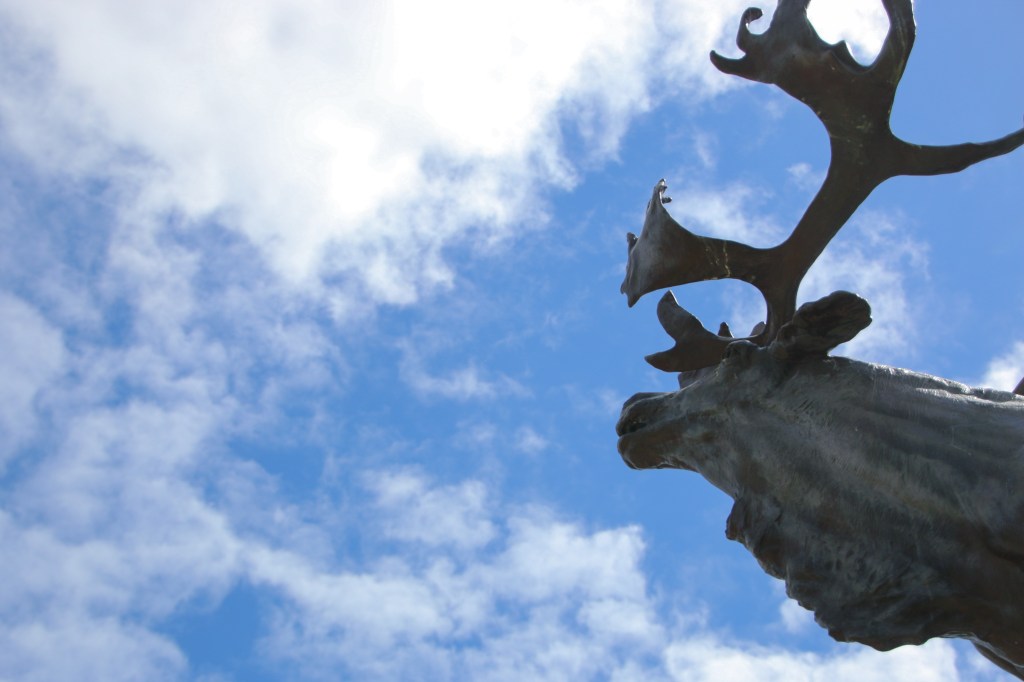
Obviously, the legacy of the Royal Newfoundland Regiment looms large over the hockey team. The man is the obvious thing, also, the shoulder patches on the jersey are based on military chevrons, and the team’s logo is a caribou – the longtime emblem of the Royal Newfoundland Regiment. In fact, the memorial at Beaumont-Hamel is a bronze caribou – as seen in this post’s header image.
And, of course, the legacy of the Royal Newfoundland Regiment looms large over the province in general, as attested to by the Great Big Sea song:
Now, a quick reminder that I am a professional writer and editor, and if you’re in need of writing and editing support, please consider taking a look at the work and rates currently offered by Emona Literary Services™ and reach out if you think I can help you.
Please consider supporting Emona Literary Services™ to help me expanding my publishing and content creation projects, via Patreon, Ko-fi, or directly through Paypal by scanning the QR code below:

You can follow me on my various social media platforms here:
© Joel Balkovec — Published by Emona Literary Services™.

This work is licensed under a Creative Commons Attribution-NonCommercial-NoDerivatives 4.0 International License.
The author prohibits the use of content published on this website for the purposes of training Artificial Intelligence technologies, including but not limited to Large Language Models, without express written permission.
All stories published on this website are works of fiction. Characters are products of the author’s imagination and do not represent any individual, living or dead.
View the Emona Literary Services™ Privacy Policy here.


Leave a Reply