
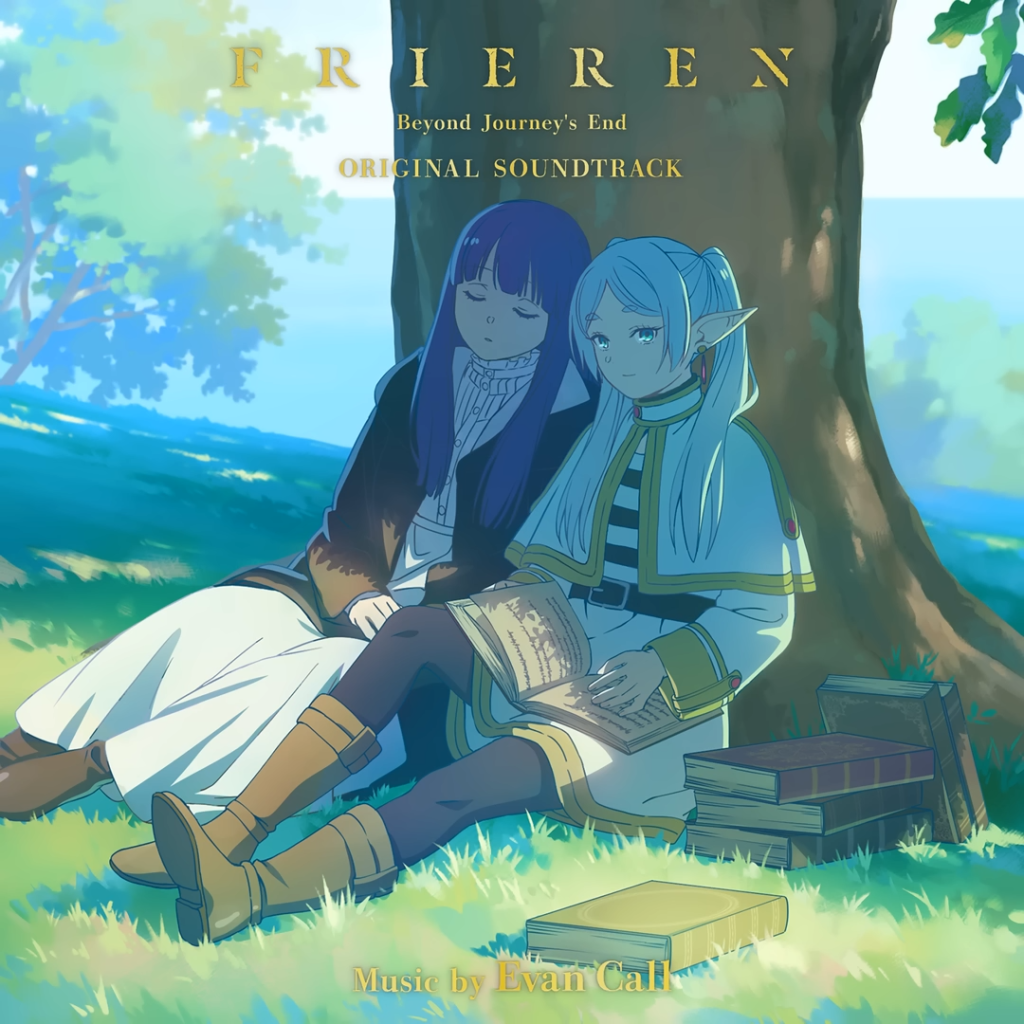
I made the mistake of checking Reddit to get a sense of the discourse about Frieren being autistic…
Admittedly, I could have ended that sentence at “Reddit.”
And found it pretty disheartening how much hostility there is from neurotypicals about just the possibility that, hey, maybe Frieren might be a little (or a lot) neurospicy.
Bit of life advice: if you’re not autistic, do not tell autistic people how to feel about their own lived experiencee with autism.
Incidentally, that’s also the basis for a lot of the most braindead takes I was seeing (again, from neurotypicals) about Autistic Barbie.
God forbid we should identify with cool characters we see ourselves in…
Now, admittedly, Frieren does come from a world corresponding largely to the medieval/early modern Holy Roman Empire where clinical psychology does not seem to exist as a discipline and where the terminology to even describe her as “autistic” also does not seem to exist.
Also, like I mentioned at the top, how much of Frieren’s personality and psyche are the result of her being an Elf and how much is her just being Frieren is not entirely clear.
But, like, she’s clearly autistic.
Well, that, or she’s secretly a cat…
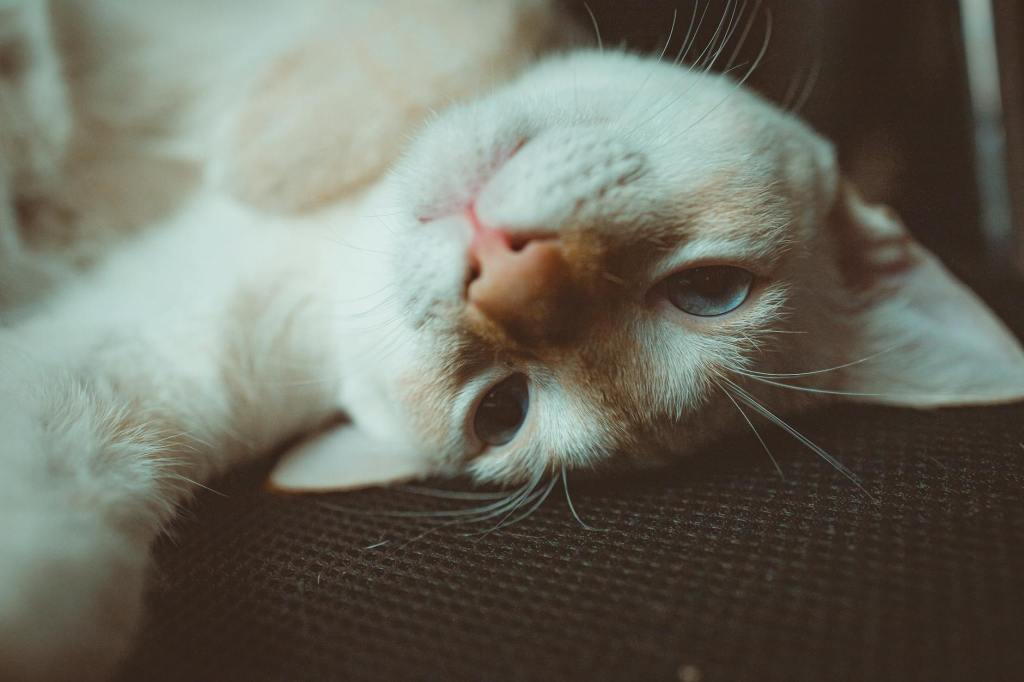
Photo by Lucas Pezeta on Pexels.com
In retrospect, I think part of the hostility towards identifying with Frieren as autistic is the prevailing assumption/stereotype/notion/I’m not entirely clear what word to use here that “Autism = Quirky/Quiky = Autistic” and the response is therefore “No, she’s not autistic, she’s just weird and you’re too autistic to understand the difference.”
I hate the Internet…
I’m not insisting that Frieren is autistic just because she’s weird.
I’m recognising somebody who’s like me because she’s weird in the same ways I am. In fact, part of the reason Frieren resonates with me is because she reacts to things a lot of the same way I would. Once again, God forbid we should cling to characters we see ourselves in. Especially characters who are strong, intelligent, capable, and compassionate.
Again, like I mentioned when I was summarising the series in the first of these posts, one of the defining moments of Frieren’s character arc comes when she starts crying openly after Himmel’s funeral and resolves to connect more genuinely and deeply with her Human friends.
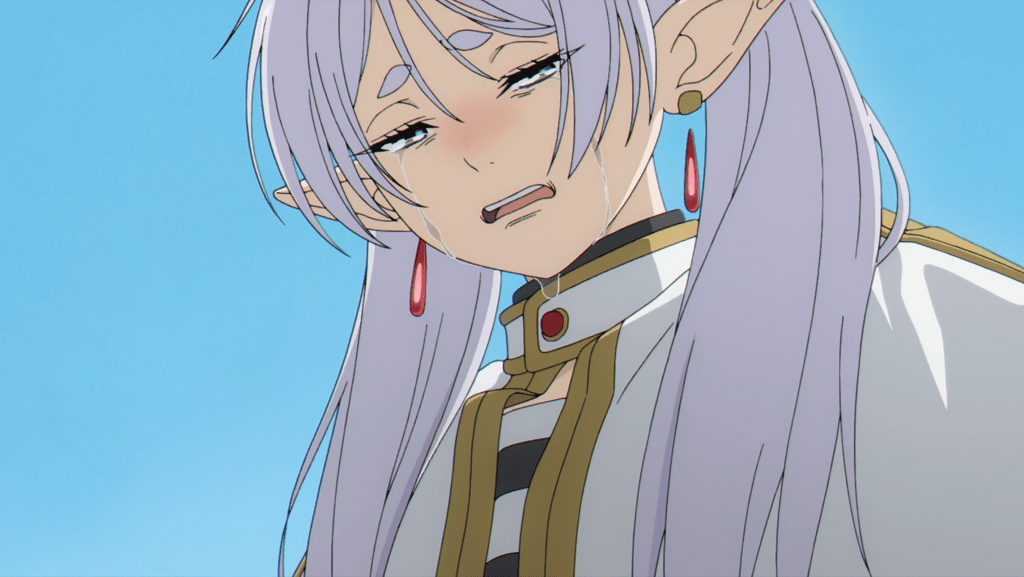
Frieren: Beyond Journey’s End – Madhouse.
Essentially, she’s making the resolution to be more emotionally open and honest. It’s a simple thing, but it’s not easy to actually do.
Especially because emotions suck…
To go on a bit of a tangent – and one I may be getting wrong because I’m not a big Trek guy – I remember reading somewhere that Vulcans are the way are (if you’re also not a big Trek person, that’s what Spock is) – cold, analytical, and apparently aloof and unfeeling – not because they don’t have emotion, but because they have too much emotion and deliberately repress their emotions to avoid succumbing to them.
Despite not being a Trek guy, that idea has always really resonated with me. It feels like it lines up with the autistic experience. It’s easier to clam up and run away from intense emotions that let basically every little thing trigger an intense emotional response.
Because, like I said, emotions suck.
Circling back to Frieren, her conscious decisions to be more open and honest with her emotions and relationships with her friends really hits me, because I’ve been trying to do that over the past few years – feeling my feelings more honestly and expressing and articulating them to other people, rather than just sort non-committally mumbling “I’m fine…” whenever somebody asks.
It’s hard.
Because if you’re being more honest and open with your positive emotions, you have to be more honest and open with the bad emotions, too.
Fundamentally, I think that means Frieren is one of the bravest anime characters out there – not because she unflinchingly faces down demons and blows them away with a single spell.
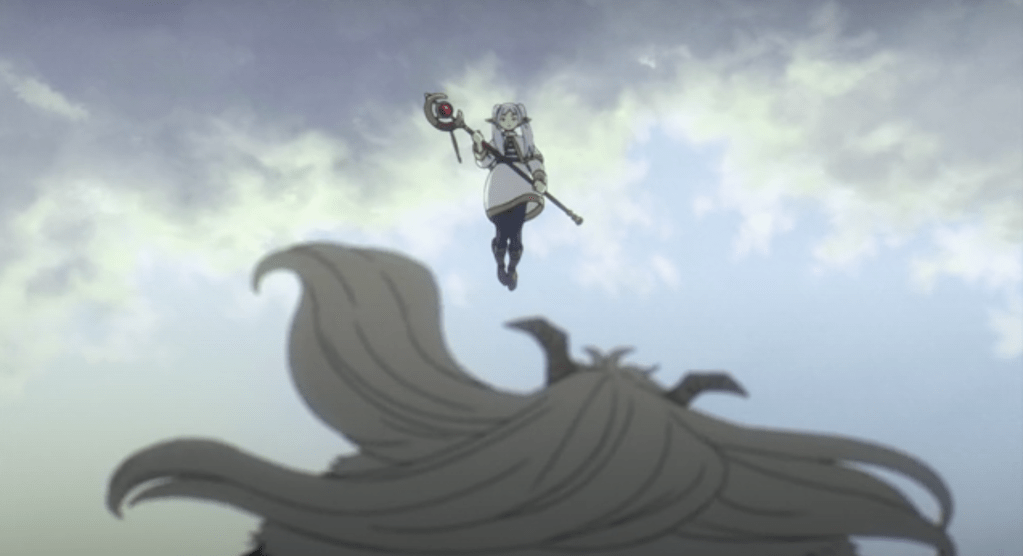
Frieren: Beyond Journey’s End – Madhouse.
But because she’s brave enough to be honest and vulnerable.
Again, it’s hard. Even for neurotypicals.
It’s also a very valuable message, even for neurotypicals.
But it’s especially difficult for autistic people, because we’re not really allowed to be the way we are and “Be yourself” really only applies to us for as long as we’re weirding people out by feeling walls, or getting upset that the fork is on the wrong side, or being uncomfortable around big smells and loud noises.
Hence, we we want to cling to characters like Frieren, She’s allowed to be herself, and the self that she’s being is awesome.
Even just the simple fact that Frieren has healthy relationships friends that care about and respect her and that she respects(ish) and cares about makes the series a very powerful, positive portrayal of autistic characters.
Frieren doesn’t necessarily win every fight she faces or instantly overcome every obstacle in her path. And, in fact, there are several moments where she outright fails or concedes to another character who’s better-suited to the task at hand. That being said, when the other characters need to bring in a ringer, they do usually turn to Frieren.
I’m not used to autistic characters being the one the other characters look up to or rely on. Or even particularly respect, for that matter. So, obviously, I’m all in on more autistic representation where the autistic character is an absolute badass.
It’s why The Accountant is one of my favourite movies.
On the flipside, Frieren is also a really funny, entertaining, and endreading character. I mentioned earlier that she’s basically a cat.
Because she’s rather small, cute character, there’s a running gag through the series that the other characters all want to pat her head, which she doesn’t particularly like. Unless, of course the other characters essentially bribe her by doing or giving her something that she wants first.
Also, she comes across as aloof, distant, and hostile, but is actually a total sweetheart. Especially if he other characters essentially bribe her by doing or giving her something that she wants first…
See? Basically a cat.
I don’t think I need to do an exhaustive point-by-point rundown of all the ways Frieren reminds me of me and therefore resonates with my own autistic experience – especially because I’ve already talked about them pretty extensively in the two halves of this write-up. While Frieren’s quirks do provide a lot of moments of humour and levity, they’re also presented good-naturedly enough by the script that they don’t feel like we’re laughing at her.
Which is, again, a pretty welcome pace from how autistic characters are usually portrayed.
And even when Frieren is obviously being the butt of the joke (which does happen pretty often), the humour is framed as pretty straightforward slapstick or slapstick-adjacent comedy.
To quickly highlight more of the ways it’s clear her brain isn’t like your brain: the cat-like outward aloofness masking very intense emotional experience, the love-hate relationship with physical contact from other people.
She’s pretty literal and doesn’t really pick up on conversational cues and nuance – for example, innocently asking a character nicknamed Goatee Priest if he was still called that before he grew a goatee.
She’s one of the most skilled and learned mages in her world and Frieren is also obsessed with collecting obscure magic. Unlike the typical Fantasy wizard, who might similarly be obsessed with collecting obscure magic because it’s powerful or impressive, most of the magic Frieren is after is conceptually weird, functionally bizarrely specific and therefore practically pretty useless.
Frieren doesn’t want these spells because it’s practically beneficial to her. She just thinks they’re neat, and she wants them because she doesn’t have them.
The major recurring gag of the series is also a pretty clear demonstration of how Frieren’s mind works. Although she has a spell that allows her to identify whether or not a treasure chest is actually a Mimic, because there is a concrete and minimal but non-zero chance that the spell will come back with a false positive, she will assume that it’s a false positive, and therefore inevitably fall for the Mimic.
Repeatedly and without fail.
To the point that there’s literally multiple variations of merch of Frieren being chomped by a Mimic…
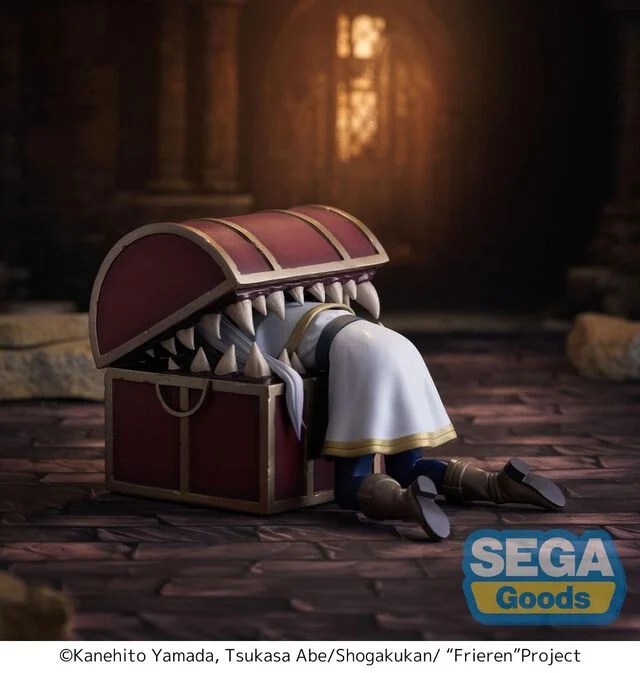
Frieren: Beyond Journey’s End – Madhouse. Figure produced by Sega. Image via Crunchyroll.
As you’ve probably gleaned from this post, the Fantasy genre poses certain challenges for autistic representation, in that the diagnosis and the terminology to clearly identify autistic characters doesn’t necessarily exist in the first place.
That doesn’t mean you can’t have autistic representation in Fantasy worlds, or that the representation can’t be powerful or resonant.
Positive autistic representation is a story worth telling in any genre. And because I’m an autistic Fantasy author, I’m going to tell stories about autistic characters.
See, for example, the Realmgard story, The Treasure of Oake Island, featuring the autistic Elf that I did write, Annie Darkstone.
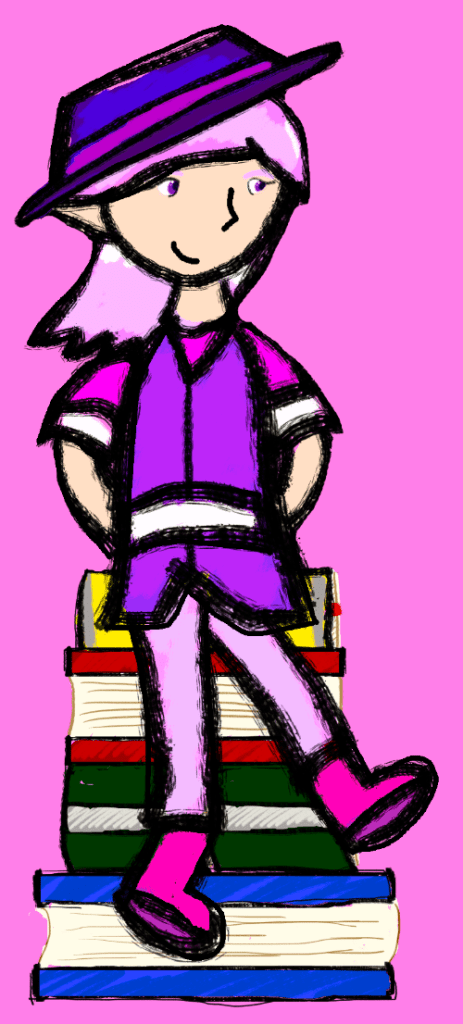
If you’re interested in supporting autistic stories by autistic authors, consider reading The Treasure of Oake Island on the Realmgard website.
In general, I think there’s enough of a dearth of positive autistic representation that even those portrayals coming from neurotypical creators are worth reading.
For the record, I don’t know if either of the creators of Frieren are autistic, but they clearly care about positively depicting people like me, which is absolutely worth supporting.
So, Kanehito Yamada and Tsukasa Abe: thank you. And other creators writing autistic characters, pay attention to what they’re doing, because you’re not likely to find better depictions, especially in Fantasy stories.
Hence, why you should watch and/or read Frieren, the best story about an autistic Elf that I didn’t write.
Now, a quick reminder that I am a professional writer and editor, and if you’re in need of writing and editing support, please consider taking a look at the work and rates currently offered by Emona Literary Services™ and reach out if you think I can help you.
Please consider supporting Emona Literary Services™ to help me expanding my publishing and content creation projects, via Patreon, Ko-fi, or directly through Paypal by scanning the QR code below:
You can follow me on my various social media platforms here:
© Joel Balkovec — Published by Emona Literary Services™.

This work is licensed under a Creative Commons Attribution-NonCommercial-NoDerivatives 4.0 International License.
The author prohibits the use of content published on this website for the purposes of training Artificial Intelligence technologies, including but not limited to Large Language Models, without express written permission.
All stories published on this website are works of fiction. Characters are products of the author’s imagination and do not represent any individual, living or dead.
View the Emona Literary Services™ Privacy Policy here.
 Emona Literary Services
Leave a comment