
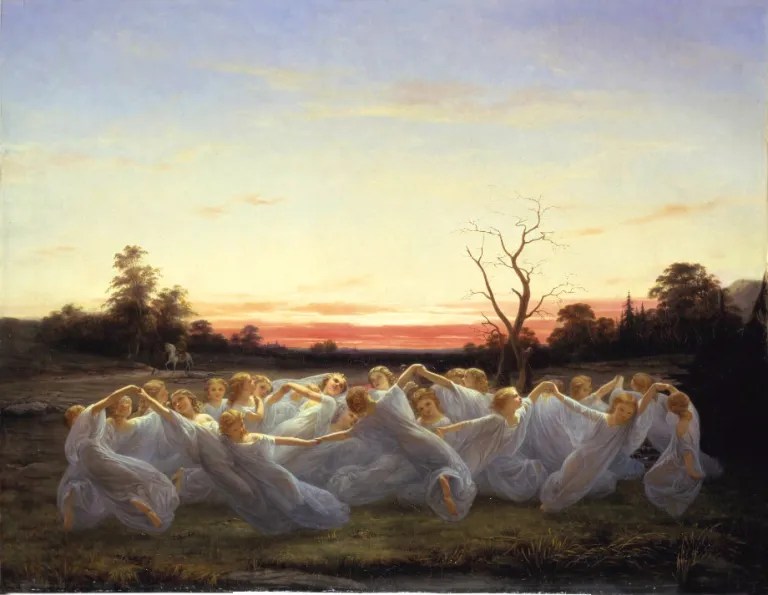
Today’s recommendation is The King of Elfland’s Daughter – the, uh, the book by Lord Dunsany. Not the actual daughter…
Ahem.
Today’s recommendation is The King of Elfland’s Daughter – the, uh, the book by Lord Dunsany. Not the actual daughter…
Ahem.
Now, the whole “fairies–as–tiny–women–with–butterfly-wings” thing, while ingrained in the popular consciousness, is a fair(l)y modern thing, starting more or less in the Victorian era.

Before that, “fairy” was basically shorthand for “any magical creature from Otherworld’ and is basically synonymous with “Elf” – in my own writing, that’s generally how I treat the word “Elf”, despite the general Fantasy archetype of Elves being “pointy-eared and better than you.”
Well, either that, or they’re Christmas Elves.

Now, I think this largely stems from the fact that most modern Fantasy essentially boils down to “Tolkien, but less talented.”
Although Tolkien’s Elves are, in fact, better than you, but Tolkien was also a wise enough and theologically-minded enough man to work out a complicated metaphysical justification as to why: Elves and Men have souls that operate in ontologically different ways and Tolkien viewed his Elves as fundamentally unfallen and affected by Original Sin.
Tolkien’s Elves do also retain certain traces of traditional folkloric Elves: The magic, the weapons and artifacts, living in a realm outside the mortal world. But, of course, most subsequent readings of the Legendarium have been rather superficial, so the state of modern Fantasy Elves has made them much, much less interesting.
Especially in light of the above point about Christmas Elves, it’s funny to note that Tolkien did also write about Christmas Elves – but even then, he still writes them as having similar traits and linguistic cues to the Legendarium Elves. Notably, Santa’s personal secretary is named Ilbereth.
I am, in fact, going somewhere with this, I promise. All that preamble is to drive home the whole “Elves as Fairies” tradition, because my current recommendation is quite literally a Fairy Tale.
Stop me if you’ve heard this one before: Boy meets Girl, Girl is Elf Princess, Boy marries Girl, Girl can’t find joy in the world of mortals and goes back to Elfland, Boy goes on epic quest to find Girl.
Magic ensues and eventually, everybody lives happily ever after.
And that’s basically The King of Elfland’s Daughter. A book written by this handsome fellow…
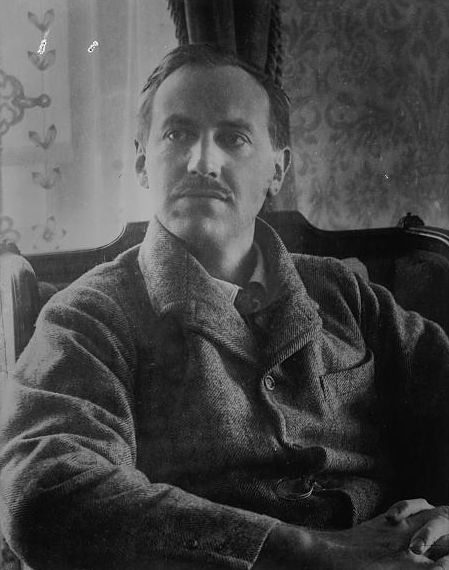
…Edward Plunkett, 18th Baron of Dunsany, popularly known as Lord Dunsany, who is notable for being one of the prolific Fantasy writers to pre-date Tolkien. Tolkien didn’t invent the genre – you could argue that Sci-Fi and Fantasy go back as far as Ancient Rome with Lucian of Samosata’s True History. But Tolkien absolutely and indelibly shaped the modern conception of the genre.
Also, given that Lord Dunsany was writing about Elves even before Tolkien was, it’s not exactly surprising that he’s also drawing from the “Elves as Fairies” traditions and depicting Elves that are a lot closer to Irish folklore than Dungeons & Dragons.
In general, Lord Dunsany’s stories tend to be really outlandish and just plain weird — that’s not a bad thing, by the way.
The King of Elfland’s Daughter isn’t really an exception to that, as you’d perhaps expect from a book about a dude questing through the world of the Elves. It’s pretty weird top-to-bottom: Weird characters do weird things, events and places are described with weird imagery and turns of phrase, the plot doesn’t really get into boring, mundane details.
It feels less like a modern novel and more like an old Fairy Tale. Hardly surprising, given that it is, like I said, literally a Fairy Tale.
Not, of course, to be confused with popular anime Fairy Tail:
The upside to this is that the prose itself is so well-written and evocative that even when the story is dragging on (which it definitely does towards the end of the middle third, or so), actually reading the story is still worthwhile because the style of how its written and the choice and use of words and language is always just so sublimely overawing.
To a certain extent, The King of Elfland’s Daughter has really influenced me.
Not so much for Realmgard, where my Elves are Roman. On the other hand, for both the Spear-Woman stories and the Mariburg stories, there is that sense of lands and powers beyond the Fields We Know, encroaching on the mortal world – and at least one character who’s the child of a mortal adventurer and a Elf (though, strictly speaking, the word I use is “Nymph”) woman.
Also, I named my first Fire Emblem Awakening character Lirazel in honour of the title character.
So, yeah, take a chance on visiting the Perilous Realm and going beyond the fields we know. Just be mindful of finding your way back…
The edition of The King of Elfland’s Daughter on my bookshelf is from Del Rey. However, because the book is old enough to be in the Public Domain, it is freely available online on various websites, including as one of LibriVox’s Public Domain audiobooks.
Now, a quick reminder that I am a professional writer and editor, and if you’re in need of writing and editing support, please consider taking a look at the work and rates currently offered by Emona Literary Services™ and reach out if you think I can help you.
Please consider supporting Emona Literary Services™ to help me expanding my publishing and content creation projects, via Patreon, Ko-fi, or directly through Paypal by scanning the QR code below:
You can follow me on my various social media platforms here:
© Joel Balkovec — Published by Emona Literary Services™.

This work is licensed under a Creative Commons Attribution-NonCommercial-NoDerivatives 4.0 International License.
The author prohibits the use of content published on this website for the purposes of training Artificial Intelligence technologies, including but not limited to Large Language Models, without express written permission.
All stories published on this website are works of fiction. Characters are products of the author’s imagination and do not represent any individual, living or dead.
View the Emona Literary Services™ Privacy Policy here.


Leave a comment