
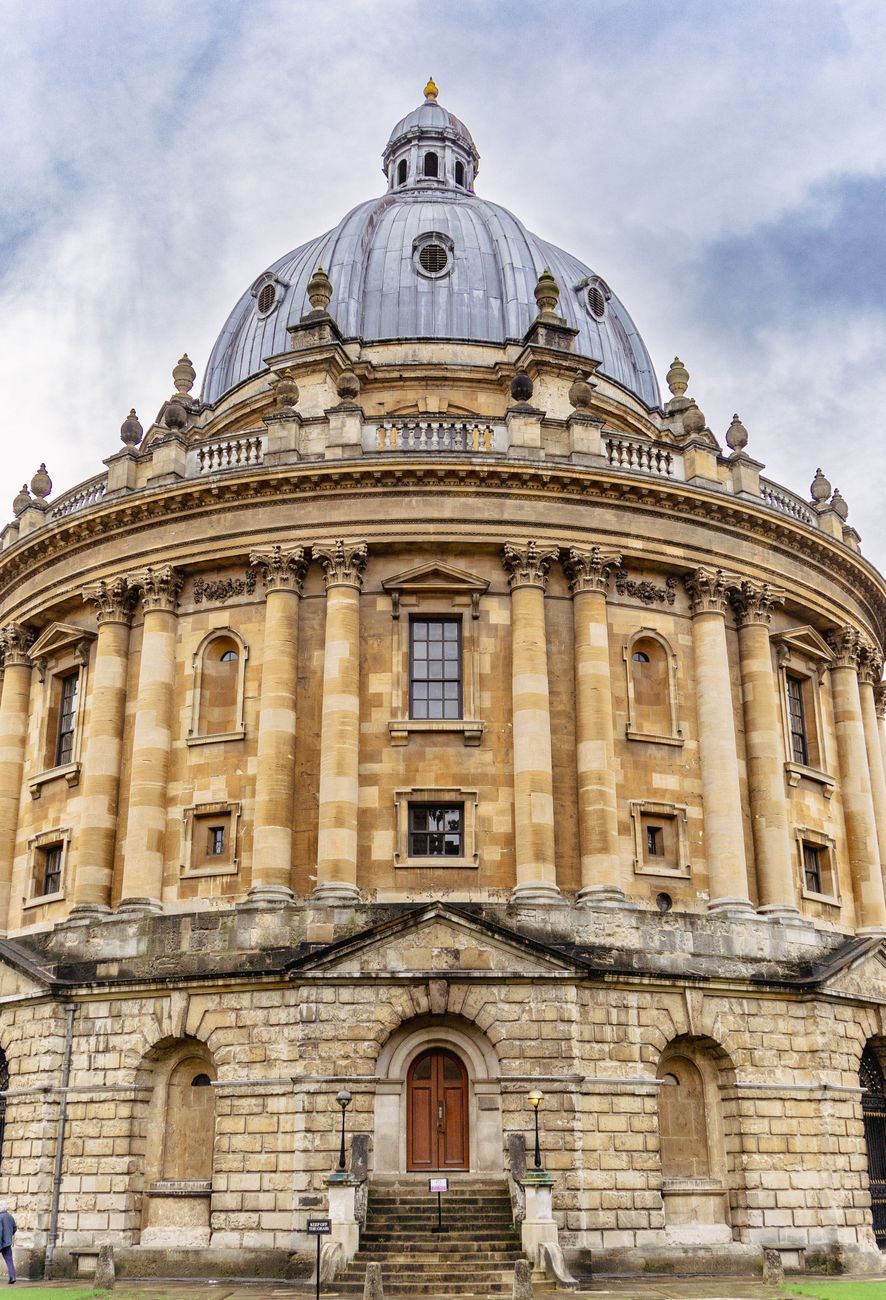
I feel like there’s no real point in drawing out the reveal here, particularly because the subject of the movie is the title of the movie.
And, well, I think I’ve probably made it abundantly clear who I’m talking about whenever I mention my favourite author.
And, anyways, here’s Tolkien.
To briefly sum up: It’s at least adequate as a movie in its own right, but if you’re actually hoping to learn anything about the real Professor Lieutenant John Ronald Reuel Tolkien, CBE, FRSL, you’re probably better off reading any of the vast corpus of much more credible literature devoted to him.
Incidentally, one of the most interesting books I’ve ever read about Tolkien is called Tolkien’s Modern Reading – to the point I’d very much like to do a Recommendation post about it at some point.
Although Tolkien’s Modern Reading is published by Word on Fire, probably one of the two most prominent online Catholic educational and evangelistic outlets (the other, incidentally, being Ascenion), it’s not really a Catholic book. It absolute presents Tolkien’s own Catholicism as a major part of his personal and creative life (and it was), but it’s not about that. Fundamentally, it tries to reconstruct using available information from Tolkien’s correspondence and personal library, with the ultimate goal of establishing that Tolkien did, in fact, read and occasionally enjoy things written after the year 1200, despite the popular image of him as a crotchety old antiquarian.
There’s ambiguous evidence, for example, that he read and enjoyed at least one Conan story.
But that, much like just what the heck the cats of Queen Beruthiel are, is a story for another time…
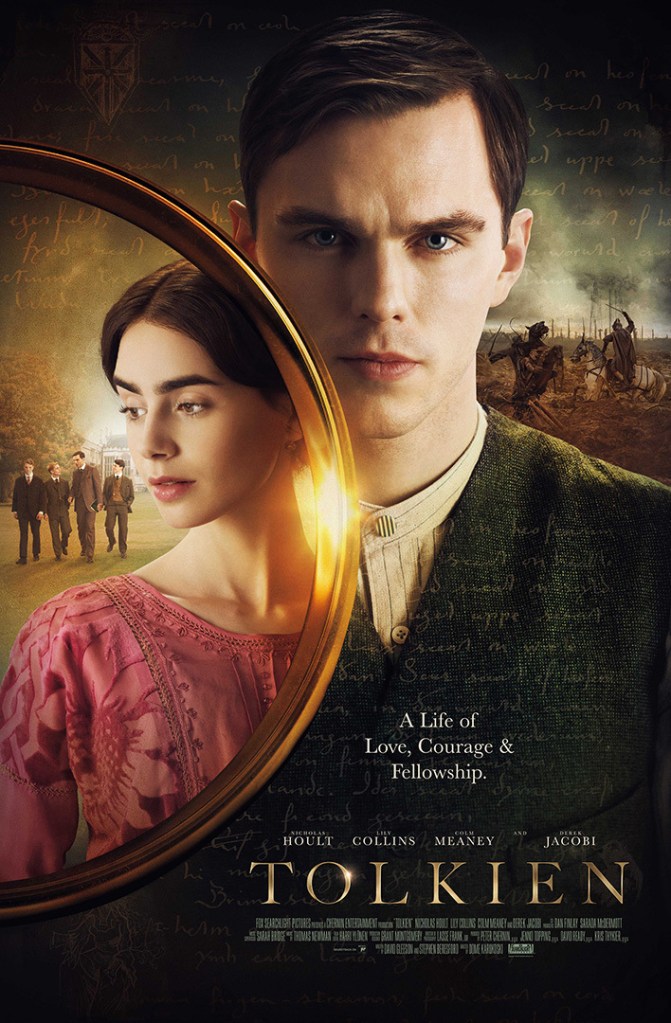
Although Tolkien really only tells the story of the real J.R.R. Tolkien in the most barebones, broadstroke, lawyer-friendly (the movie was not endorsed by either the Tolkien Estate or the Tolkien Society) manner, it’s still a both a good enough movie and hits enough of the most interesting and dramatically compelling parts of Tolkien’s that it’s still a pretty powerful movie.
At the very least, it’s a really interesting story about an artist, even if the artist in question really only vaguely resembles the historical one.
That basic – and most interesting – beats of the real Tolkien’s life are there:
- Orphaned at a young age.
- Fostered by a priest.
- Fell in love with a woman he wasn’t allowed to see until he was 21.
- Had a core group of friends from school; saw most of those friends die during World War I,
- Studied at Oxford; became Oxford professor.
- Invented an entire language because he thought “cellar door” is the most beautiful possible word.

Notably, because the movie wasn’t allowed to talk about any of Tolkien’s books by name, all you get is some vague, on-the-nose references to things like ‘rings’ and ‘Fellowship’…
Though, admittedly, some of them did get a chuckle out of me.
One of what is probably the film’s most glaring liberties taken is the implication that Tolkien was writing The Lord of the Rings during the War. In fact, it was the stories that ultimately formed the core of The Silmarillion that Tolkien was writing first and continued to work on while a soldier and while convalescing after getting sick on the front.
And the World War I influence is pretty clear on this stories, to the point that the Balrogs are riding tanks in the earliest versions of the Fall of Gondolin.
Though that in itself is probably a pretty clear demonstration of what I think is a key piece of understanding Tolkien: The more you know about the real J.R.R. Tolkien, the more these sorts of changes are going to bother you.
Which, I suspect, is true of the subject of most historical dramas…
Also, while most of the audience probably won’t care, the movie managed to make a lot of Catholic media rather indignant by completely neglecting Tolkien’s Catholicism.
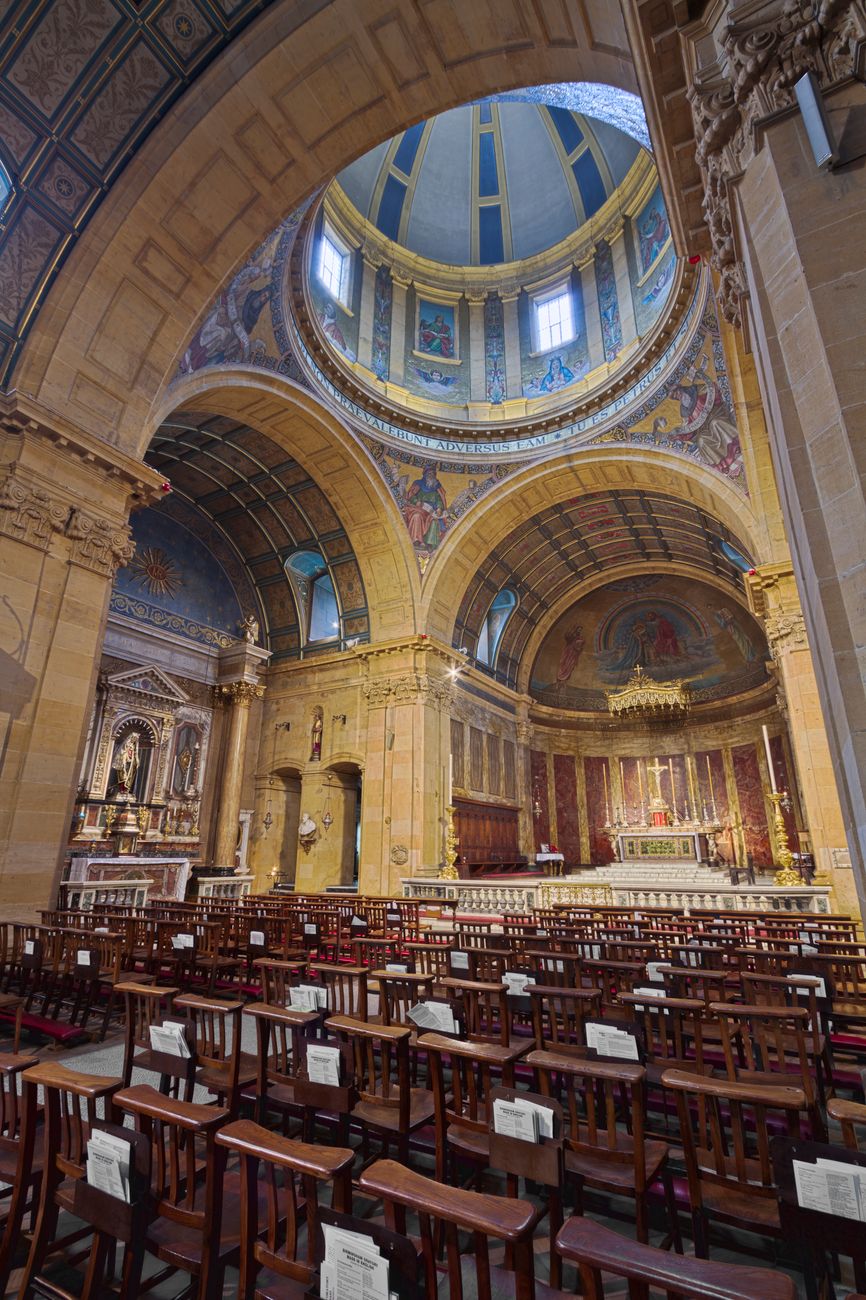
Photo by Michael D Beckwith on Pexels.com
There’s at least one vague reference to the fact that Tolkien’s mother was disowned by her family for converting to Catholicism, when she mentions some “hard times” ahead and Fr. Morgan, the guardian of the Tolkien brothers, is a fairly prominent supporting character.
Admittedly, I’m also not entirely sure how the filmmakers would have represented Tolkien’s Catholicism on-screen – especially given that most movies are trying to be as blandly appealing and inoffensive as possible, something that in-depth discussions of religion are rarely conducive to.
Though, I supposed, they could have had a couple scenes of Tolkien going to church, or something.
Another sidebar: one of Tolkien’s major influences was an Anglo-Saxon Advent poem called the Christ I (that’s a one not a letter; it’s the first of the poems titled “Christ” in the Exeter Book and indicated as such via Roman numerals).
The poem contains the line: “Hail Earendel, brightest angel over Middle Earth sent to Men”, which Tolkien evidently took and ran with, giving us the greatest of mariners (incidentally, Elrond‘s father) who went on to slay the greatest dragon ever to exist with his magic space-boat and became Venus.
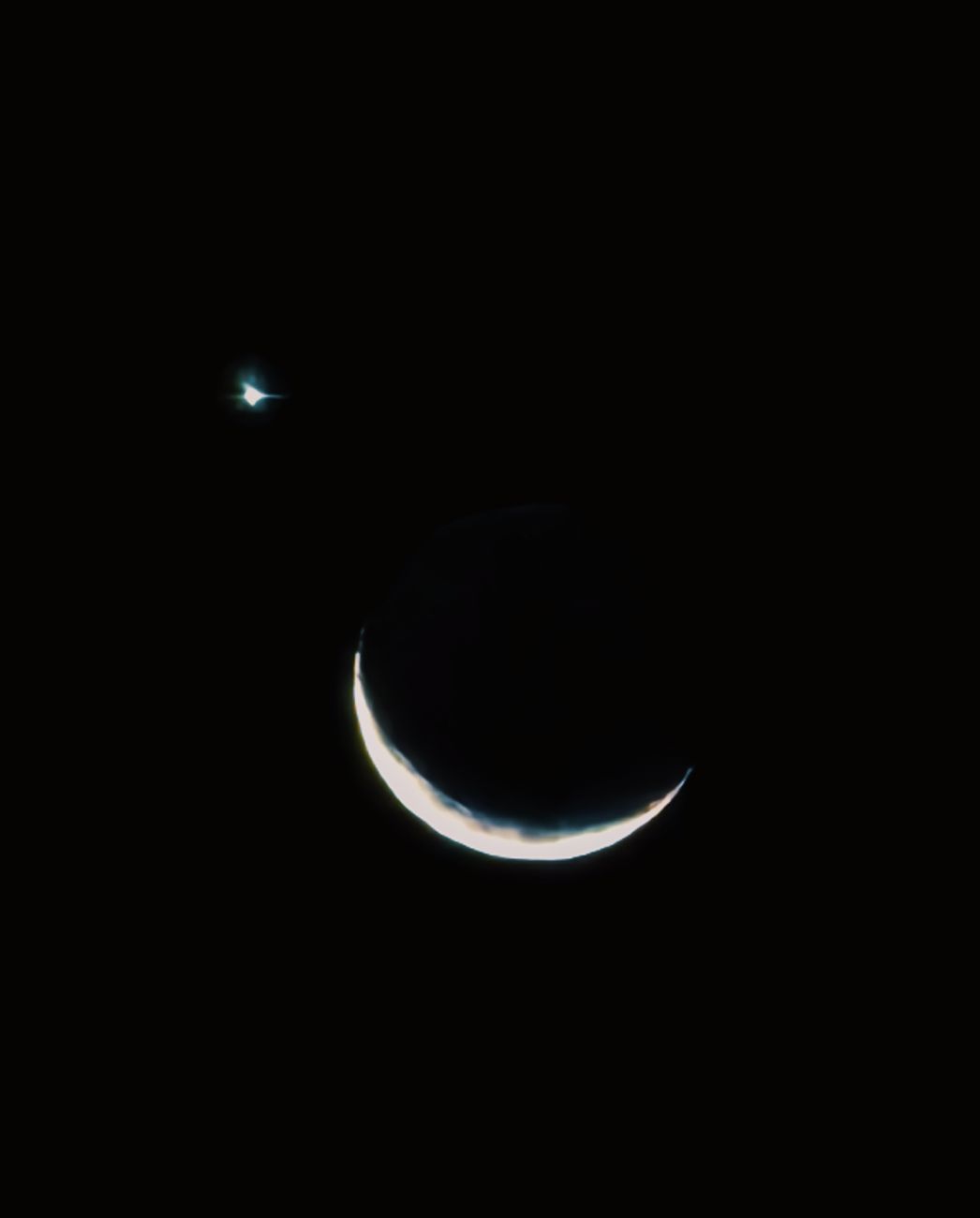
Photo by Willian Santos on Pexels.com
I mentioned the vague allusions to Tolkien’s works that they couldn’t talk about by name earlier. I think my favourite is one of Tolkien’s friends asking “Who needs six hours to tell a story about a Ring?”
In context, he’s talking about the Ring Cycle, but given that the Lord of the Rings movies exist, the meta reference is obvious.
Nicholas Hoult gives a good performance – which is good, because he’s the lead – though he’s a lot younger that the aforementioned image of Tolkien as a crotchety old Antiquarian that is probably what most people envision when they think of Tolkien. Speaking of, Harry Gilby, who plays the young Tolkien during his school days is pretty impressive in the role and has really good chemistry and banter with the actors playing Tolkien’s friends.
Lily Collins is also pretty good as Edith, the eventual Mrs. Tolkien and has good chemistry with Hoult. Which, again, is good, because this is basically a romance movie and the relationship between the two is the centrepiece
And there are clearly only so many British actors, because there were a few times when I went ‘Oh, hey! It’s that guy!’
As I have said in basically every section of this post so far, even though the movie is only giving us the basic outline of Tolkien’s life, even that is sufficient to make a very powerful story.
And part of that is the fact that, to quote the video I’m linking to below, “Tolkien had a higher dosage of reality than most of us.”
Dude did a whole lot of living and got a lot of insight into the Human condition.
TL;DR – it’s pain.
That higher dose of reality is such a key part of Tolkien’s life history and his writing that it’s clearly apparent even – or maybe even epsecially – when we’re dealing with a caricature of the real Tolkien.
Tolkien’s biography is more interesting than plenty of fictional characters living in larger-than-life Fantasy worlds and it’s impossible to tell the story of his biography without portraying the higher dose of reality.
Even if all of the other details are subsequently invented whole-cloth…
If you skipped over it, I highly recommend watching that video I posted, because it really does explain how Tolkien’s own history affected the history of Middle-earth.
Now, a quick reminder that I am a professional writer and editor, and if you’re in need of writing and editing support, please consider taking a look at the work and rates currently offered by Emona Literary Services™ and reach out if you think I can help you.
Please consider supporting Emona Literary Services™ to help me expanding my publishing and content creation projects, via Patreon, Ko-fi, or directly through Paypal by scanning the QR code below:
You can follow me on my various social media platforms here:
© Joel Balkovec — Published by Emona Literary Services™.

This work is licensed under a Creative Commons Attribution-NonCommercial-NoDerivatives 4.0 International License.
The author prohibits the use of content published on this website for the purposes of training Artificial Intelligence technologies, including but not limited to Large Language Models, without express written permission.
All stories published on this website are works of fiction. Characters are products of the author’s imagination and do not represent any individual, living or dead.
View the Emona Literary Services™ Privacy Policy here.


Leave a Reply