
I feel like cynical, subversive takes on superheroes are pretty popular lately, thanks in large part to Amazon’s Invincible and The Boys adaptations going on to become pretty big streaming hits lately. Though both of the series are based on original comic books that both ran from the aughts to the 10s.
And, of course, the cynical, subversive take on superheroes is Watchmen, which is old enough to book a colonoscopy at this point. So, despite the recent popularity of Invincible and The Boys, it’s not like they invented the concept of “Superheroes, but terrible people.”
I bring this up, because as I was playing Dispatch, the shadow of Invincible and The Boys was looming large over the experience. On the whole, Dispatch isn’t quite as dark or cynical as Invincible or The Boys, but it is absolutely satirising the genre, though on the whole, in a more affectionate manner.
Tv Tropes describes Dispatch as a work of Capepunk, a term I had never heard before, but based on the description of the genre as “Abnormally mundane and/or deconstructive takes on the Superhero genre,” I’d say it fits.
Dispatch is, fundamentally, a workplace sitcom…
Before I get too far ahead of myself, fair warning that Dispatch is a pretty NSFW game. But don’t take my word for it – the content warning on Steam from the game’s own developers runs as follows:

I played on Switch 2, and there was whole thing about how the censor options were hardcoded on the Nintendo platforms. As I understand it, the original level of censoring has since been toned down, but it’s still impossible to play the completely uncensored version on the Nintendo platforms. For the record, there’s a lot of sex and nudity and a decent amount of it is pretty explicit – probably more than even most other M-rated video games (except maybe Grand Theft Auto), but probably less than any given HBO show…
And even coming back to the game only after a couple months, one of my big takeaways this playthrough was “Wow. They swear a lot in this game.”
Brought to you by AdHoc Studio, a team emerging out of the collapse of the original Telltale Games — who were probably the biggest name in this sort of interactive-movie, multiple-choice adventure game — and the cast of hugely popular Dungeons & Dragons podcast Critical Role, Dispatch puts you in the role of Robert, the third person to take up the mantle of robot-piloting superhero Mecha Man.
After pursuing the supervillain Shroud to avenge the death of your father, the second Mecha Man, you promptly get stomped by Shroud and his minions, the Mecha Man suit gets wrecked, and you get benched in what is essentially the robot super suit equivalent of blowing your ACL.
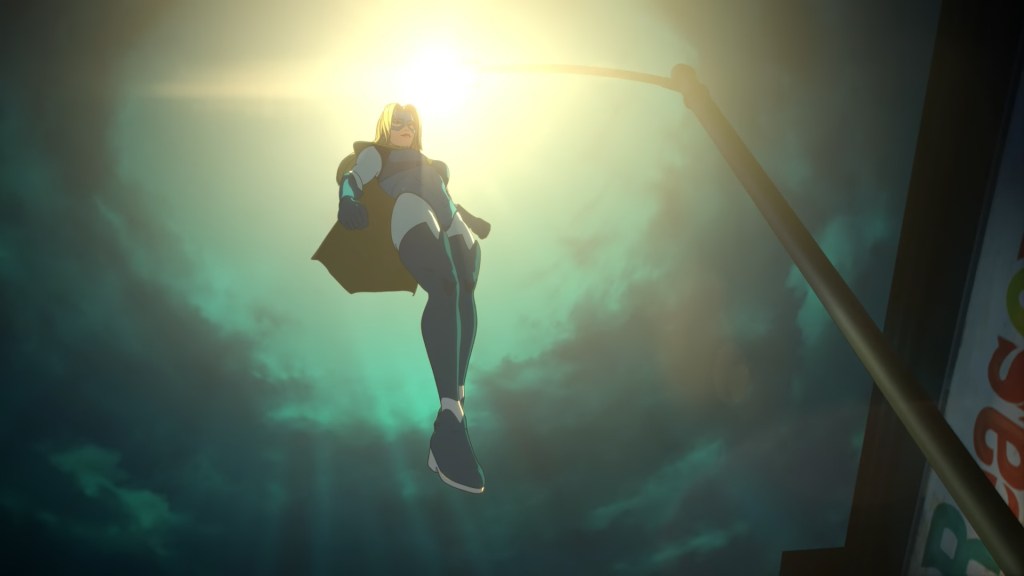
Luckily, you are soon approached by Blonde Blazer on behalf of the Superhero Dispatch Network – which is basically exactly what it sounds like and fundamentally why the game is called “Dispatch.”
Blazer offers for the SDN to take on the costs of repairing the Mecha Man suit in return for taking on the role of dispatcher and mentor for one of the SDN teams.
Dispatch: AdHoc Studio.
On the one hand, the idea of a paid superhero subscription service that only helps the people paying for it is pretty sleazy and probably wouldn’t be out-of-place in an even more cynical work like The Boys. On the other hand, it does provide an explanation for how superheroes actually make a living in the setting and despite how problematic the concept of the SDN feels, we don’t really see much of the actual corporate leadership who may very well only be in it for the money and most of the actual heroes who work for the SDN do come across as legitimately wanting to help people.
As much as it’s like a less cynical The Boys or Invincible, Dispatch also feels like a less wacky take on either of the DC Suicide Squad movies – or even just a more light-hearted take on the general premise.
The team Robert is being put in charge of is the Z-Team, the SDN’s low-ranking squad of erstwhile villains who are being given an opportunity to reform. In fact, the major thematic core of the entire game is about getting a new start, letting go of the past, and committing to be a better person than you were yesterday.
And the major obstacle of the Z-Team reforming is that no-one else takes them seriously as either superheroes or people trying to improve themselves. On paper, they have an opportunity to reform and move forward, but in reality, no-one is really giving them a chance to do so, which in turn leads to them feeling no real incentive to do better, either professionally or morally.
At least not until Robert comes along…
In my experience, it’s hard to come up with compelling concepts for new superheroes, because Marvel and DC have already laid claim to most of the good ones. And even developing non-union, lawyer-friendly takes on established superheroes can be a challenge.
Dispatch: AdHoc Studio.
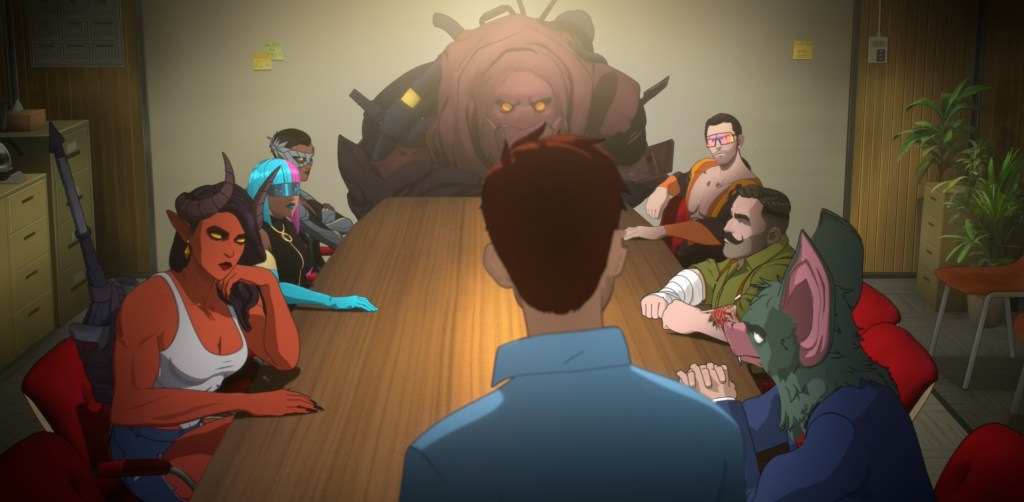
On the whole, Dispatch has done a good job of putting interesting (and usually pretty funny) spins on established superhero archetypes:
- Mecha Man – though since he’s without the suit for most of the game, he mostly goes by Robert, his government name – is basically Iron Man, though the Mecha Man suit itself is more like a full-on Gundam (though smaller than a full-on full-on Gundam) than just a person-sized suit of powered armour.
- Blonde Blazer is Miss/Captain Marvel, if she were a corporate middle manager.
- Invisigal is a pretty obvious parallel to Invisible Woman (who was even formerly called Invisible Girl) – who, as I understand it, actually has powers to create force fields that bend the light, thereby appearing invisible. Invisigal’s power more straightforwardly to just herself invisible, though she’s also portrayed as a more direct physical combatant than Invisible Woman usually is.
- Punch Up is essentially a muscular leprechaun and it took me a while to figure out why. Technically, he’s a regular person under the effects of a witch’s curse: gaining the strength of 10 men but being shrunk in return. He’s strong, truculent, and has regeneration powers. Ultimately, he’s Wolverine but Irish rather than Canadian – and I’m 95% sure that the leprechaun-coding is meant to be Wolverine’s shortness (canonically, he’s 5’3″) taken to the logical extreme. Which, I’ll admit I thought was really clever when I finally got the joke.
- Malevola is essentially Karlach from Baldur’s Gate, except Australian, with Magik’s slate of powers and cool sword.
- Sonar is a combination of Batman, Man-Bat, and the Hulk. He’s a genius (though presented as an Internet tech bro rather than a Batman- or Iron Man-style industrialist), he’s part-bat, and his gimmick in-game is that he switches back and forth between more-human and more-bat forms every other call he’s sent on, with implications for his stats – he’s better in non-combat roles when he’s more human and better at combat and physical roles when he’s more bat.
- Prism is Dazzler as a 2020s social media influencer. She’s probably the most straightforward comparison, but updated to better reflect 2020s music and Pop Culture rather than sticking with Dazzler’s 70s-era Disco persona.
- Flambae is Human Torch, with a similar arrogant streak, though written as a catty, flamboyant gay man – with at least some semblance of a heart of gold… and Razor Ramon’s haircut.
- Coupé is probably the least direct equivalent of a specific existing character in the cast, though the whole ‘metal wings’ thing does sort of make her like Archangel. On the whole, she’s less a take on any one specific character and more on the general archetype of “Angry, Edgy, Unbearably Self-serious 90s-era Anti-hero.”
- Golem is another one who’s pretty self-explanatory. He’s literally a golem and basically a nicer Clayface. In fact, despite being a giant mud monster, he probably the one who has most positive relationships with the other team members.
- Phenomaman is SDN’s poster boy and is essentially this setting’s Superman. The fact that he looks pretty similar to Invincible‘s Omni-Man is probably a deliberate design choice. Given the popularity of the “Superman, but evil” archetype, as soon as I first saw him (in part because of said resemblance), I was sure he was going to end up being a bad guy. I won’t spoil how exactly his character arc plays out, but I did find it a very interesting take on ways to subvert the Superman archetype.
- Waterboy is taking the “Aquaman is lame” (though, for the record: no, he isn’t) notion and running with it. He’s depicted as a scrawny, awkward, and generally inept rookie who initially joined the SDN as a janitor. Despite this, he has the potential to grow into one of the most useful characters in the game. The fact that he starts with minimum stats across the board means the other members of the team need to hand-hold him, but it also means he has the most freedom as he levels up and he can be purpose-built to fill any gaps in your team’s stats.
- Beef is Robert’s dog…
“There’s not enough game in this game” is a fairly common criticism for a lot of independent and lower-budget games, which tend to focus on interesting narratives or themes, or a cool new core mechanic despite being overall small-scale and simple relative to the multi-million-dollar games from major studios.
For the record, I get it. It’s probably easier to hook people with a strong narrative or that one cool gameplay mechanic when you’re working on a limited budget than it is to design a game with a lot of gameplay systems of mechanics.
Just in case you aren’t familiar with Dispatch, or the sort of games that the team put out when they were still with Telltale, there is, in fact, not much game in this game.
You will be spending most of your time watching Dispatch rather than playing it. The majority of the game is presented as cutscenes, with admittedly pretty great production values. There are dialogue choices, and those choices will have consequences, particularly with Robert’s positive or negative relationships with the other characters, particularly with Blonde Blazer and Invisigal, the two female leads and Robert’s two potential romance options.
I don’t mean any of that as a criticism. I just want to properly set the expectations.
The fight scenes unfold through quicktime events. There are really only two possible prompts, so even when you need to react fast, it’s not hard to parse what the game is expecting you to do. I never did badly enough in any of the quicktime events to know if it’s even possible to lose, but none of the inputs I failed seemed to actually do anything. At the end of each episode of the game, you get a record of your stats, and the game will tell you “You succeeded at X% of inputs. You performed better than Y% of other players.”
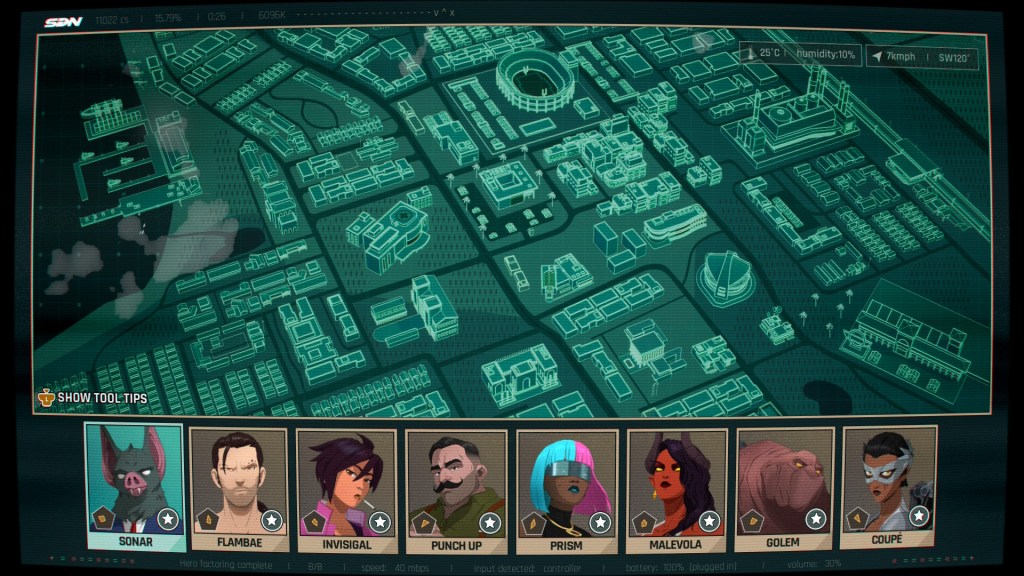
The bulk of the actual gameplay in Dispatch comes in the form of the segments where you’re working as the Z-Team’s dispatcher. On the one hand, these segments aren’t very complicated, but I did find them pretty stressful. Which, given that you’re essentially playing as a superhero 911 dispatcher, is probably exactly what they were going for.
You get a map of the city and little alerts pop up that represent a crisis who need your team to solve – ranging from mundane and realistic things like “cat stuck in tree” or “I think there’s burglar in my house” or “Get me a coffee” to plausible but major disasters like “Plane crash” or “Sports riot” or “Foreign dissident is about to be assassinated” to purely fantastical superhero stuff like “Kaiju attack” or “Mole People.”
Dispatch: AdHoc Studio.
The trick – and most stressful part – is to balance both your time and your resources. Each event that pops up will expire and be counted as a failure if you don’t get it sorted in time, and you only have a limited team of heroes to divide between calls, who then need time to cool down afterwards between calls
Success or failure is based on comparing the requirements the task with your team’s stats – some combination of Combat, Intellect, Vigor, Charisma, and Mobility. There seems to be some sort of die roll involved, because each call does tell you your probability of success, but I’m still unclear on how exactly it calculates the roll.
Each call does give you vague explanations of what it’s looking for, though that feels like a feature rather than a bug. The challenge isn’t just to send a team with enough stats, but to parse the call requirements and send the right stats.
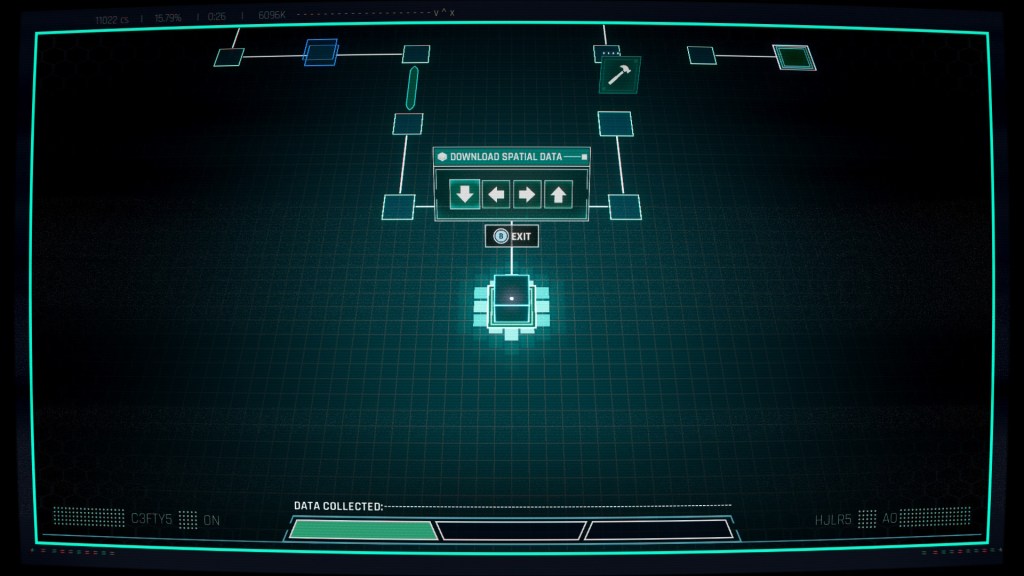
The other major form of gameplay is the hacking minigame that pops up when Robert is using his tech talents to support the members of the team who are out on call by doing things cutting the lights in the bad guy base or finding incriminating documents to blackmail the guy trying to blackmail SDN’s clients.
These consistent of basically navigating a little avatar around a maze to get from Point A to Point B, with additional gimmicks added to the minigames to make things harder as the game progress: you may need to find a code to input to unlock the neck part of the maze or the goal, or transfer electricity from one node to another, or – most annoyingly – avoid the antivirus guys that zap your avatar.
Dispatch: AdHoc Studio.
Admittedly, at their worst, I found both the dispatch segments and the hacking minigames too stressful to be fun. But their best was good enough that I found myself wishing the game had more of the segments.
Yes, you will spend most of your time with Dispatch watching. Again, that’s not a criticism on my part but I’m also aware there are people who are not going to be into that.
The good news is that the production values of what you’re going to be watching are pretty good. The art is good, the animation is good. And given that something like Dispatch is absolutely character-driven, it’s a good thing that the writing and the acting for those characters are also really good.
Now, I’ve been an old man since I was 12 years old, so I feel like there was too much Millennial Humour in the game and absolutely did not land with me. Though there are plenty of jokes that I did actually find funny.
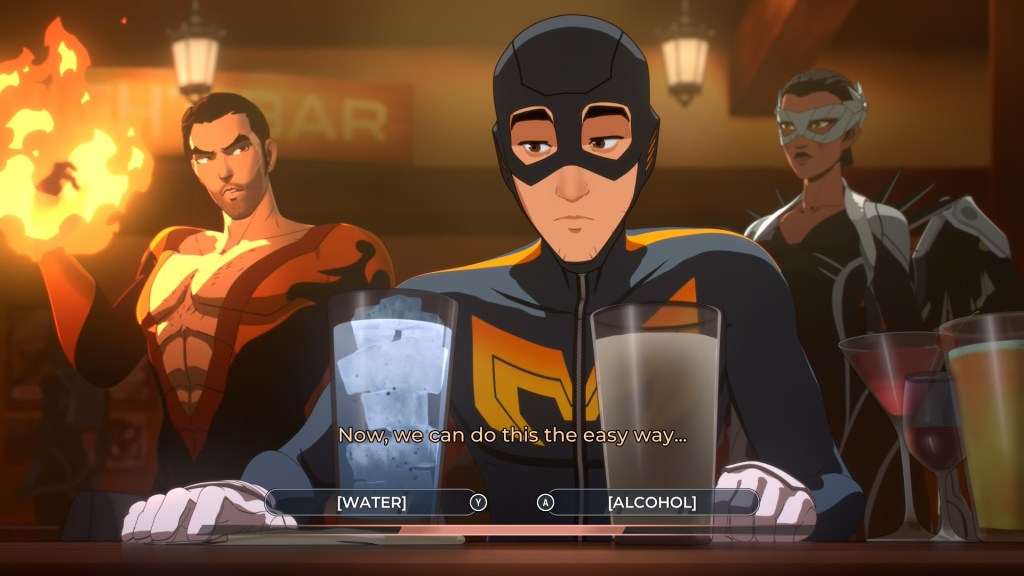
Dispatch: AdHoc Studio.
Again, Dispatch was made in collaboration with the team from Critical Role, so it should go without saying that the cast is full of some really good voice actors. If you’ve played a video game or watched an anime at pretty much any point in the past 20 years, you’ll know who these people are.
I know that’s been a lot of discussion about well-known screen actors being cast in VO roles in games and animation for the sake of having a well-known name at the top of the marquee and potentially stealing a role from a voice actor. But I wasn’t paying close enough attention to remember if anyone made a big deal about Aaron Paul being cast as Robert.
While Aaron Paul is far and away best-known for his role in Breaking Bad, he’s actually had more voice acting experience that I would have thought, having a major role in popular and well-received Netflix series BoJack Horseman. And, what I did not know — and what kinda ended up getting a chuckle out of me when I found out, given who the whole preamble to this post was about takes of the genre like Invincible — is that Aaron Paul also had a minor role on Invincible.
As I have never seen Breaking Bad or BoJack Horseman or Invincible, I can’t compare those to his role as Robert. In fact, I know who Aaron Paul, but I can’t actually remember anything I’ve watched him in before I played Dispatch…
Considered in a vacuum, Robert is probably the most ‘normal’ person in the cast, so Paul doesn’t have as many opportunities to show as much emotion or intensity or even just personality as the rest of the cast. In fact, most of his emotions are probably either Frustration or Sarcasm, though there are various moments when he gets to show more emotion (when he’s showing off a lot of Frustration), intensity (whenever the action and drama are peaking) and tenderness (in the romance scenes).
I did mention this in passing earlier, but I do feel like I’ve buried the lede by not mentioning that Dispatch is fundamentally a romance game before now.
In addition to being to two most important characters not named Robert, Blue Blazer and Invisigal are Robert’s two romance options – those two facts are probably related. Most of the dialogue choices that actually have meaningful consequences determine whether your Robert starts a relationship with Blazer or Invisigal and how exactly that progresses.
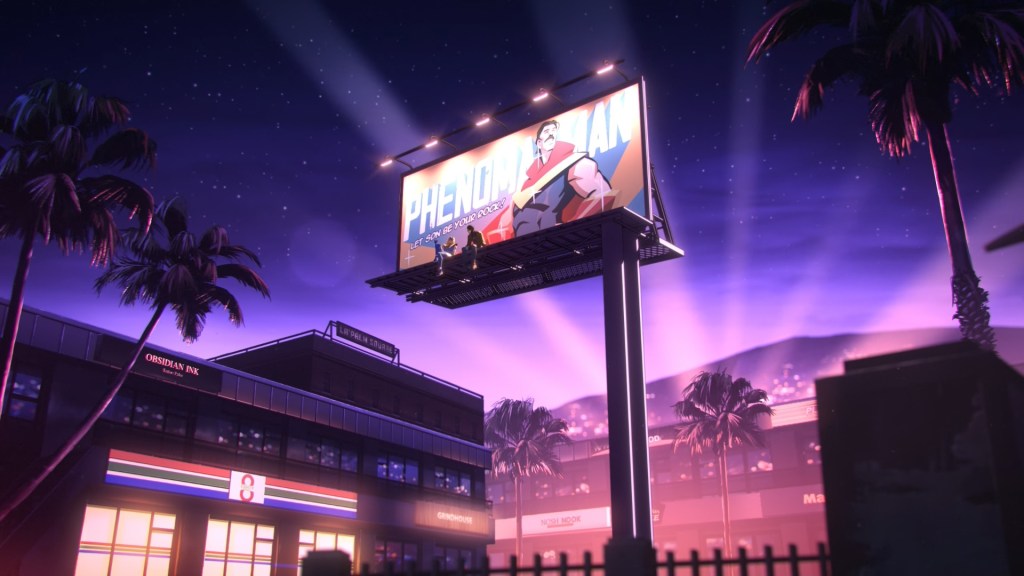
Dispatch: AdHoc Studio.
On top of that, since Invisigal’s whole character arc is about opening up to the rest of the team and becoming a committed member of the team, your interactions with her also affect who exactly that plays out, irrespective of whether or not you romance her.
Invisigal’s romance path isn’t necessary better (though it is significantly more popular with the fanbase), but Invisigal probably does grow more as a person thanks to her interactions with Robert. It’s not that Invisigal needs a man to save her – what she really needs is a friend and even on the platonic path, Robert can be a major positive influence on Invisigal. Conversely, Blazer’s romance path is more about helping her navigating her insecurities around her secret identity and the fact that she feels like people only care about her superhero persona and not her true self.
For the record, I romanced Invisigal first, though largely without meaning to. I was trying to be a good friend and when it became clear that meant I was heading down her romance path, I decided to lean into it. It maybe could have been more clearly telegraphed (though maybe that’s on me, subtext is not a strength of my people) but at least it wasn’t full-on Dragon Age “You gave me a cake, marry me.” or Baldur’s Gate “You’re hot when you’re crushing our enemies, marry me.”
I think there’s at least enough replayability in Dispatch for two playthroughs: both to see each of the romance paths and also to play through the dispatch segments with a guidebook to get everything right after doing it the hard way.
Also, to look up the codes for the hacking segments to avoid the most frustrating parts of them…
I haven’t played many Telltale-style games like this, though I have played a handful of more traditional visual novels, but I’ve enjoyed my time with Dispatch.
Admittedly, I probably would not have bought if it hadn’t been on sale, but I’m glad I went for it. For as cynical as the modern superhero genre can be, I found Dispatch to be amazingly uplifting despite its fairly satirical trappings. It’s actually a really powerful story about friendship, teamwork, redemption, and resolving to be a better person.
After playing through Dispatch a couple times, I’m actually looking forward to seeing how future seasons of the franchise are going to play out.
Now, a quick reminder that I am a professional writer and editor, and if you’re in need of writing and editing support, please consider taking a look at the work and rates currently offered by Emona Literary Services™ and reach out if you think I can help you.
Please consider supporting Emona Literary Services™ to help me expanding my publishing and content creation projects, via Patreon, Ko-fi, or directly through Paypal by scanning the QR code below:

You can follow me on my various social media platforms here:
© Joel Balkovec — Published by Emona Literary Services™.

This work is licensed under a Creative Commons Attribution-NonCommercial-NoDerivatives 4.0 International License.
The author prohibits the use of content published on this website for the purposes of training Artificial Intelligence technologies, including but not limited to Large Language Models, without express written permission.
All stories published on this website are works of fiction. Characters are products of the author’s imagination and do not represent any individual, living or dead.
View the Emona Literary Services™ Privacy Policy here.


Leave a Reply