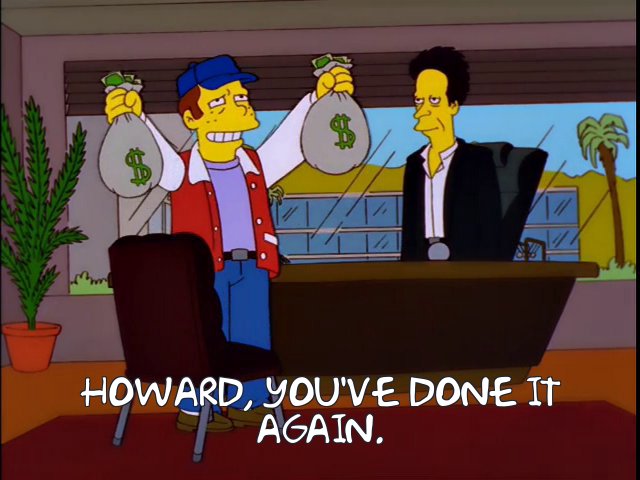
Directed by Ron Howard, seen here in what I can only assume is a 1200% real and factual picture:
Willow is, for reasons even I don’t entirely understand, one of the most influential stories on my creative endeavours.
Due to a bizarrely consistent aesthetic, in a lot of ways, Willow could be seen as an unofficial feature-length adaptation of well-selling Canadian Synth-Pop band Men Without Hats‘ 1982 hit ‘The Safety Dance’— which as per Wikipedia “was also a massive success in South Africa, reaching No. 1 on the Springbok charts.”
This, despite, there being no real connection be the two and Safety Dance predating Willow by 6 whole years…
I suspect that the sense of whimsy and weirdness in Willow comes in large part from the fact that it’s ultimately the brainchild of George Lucas. It’s been clear from the very first drafts of Star Wars (and perhaps even more clear in the early drafts than the versions that ended up put to film) that George Lucas has a lot of weird ideas in this worldbuilding.
And Willow is a weird movie.
It’s not necessarily a good movie, but watching it for the first time, I couldn’t help but feel it was a very endearing one. To be fair, it’s not even a bad movie, either. Mostly, it’s a very outlandish Fantasy movie that doesn’t quite manage to live up to its own ambitions. But it’s definitely worth watching once, at least.
I’ll go over this in more detail in the section devoted to the novelisation, but it took me a long time to actually watch Willow for the first time – especially given that the novelisation my mom read to me as a kid living rent-free in my head basically my entire creative life.
Long story short, thanks to the miracle of streaming, I was finally able to watch the movie for the first time on Disney Plus.
If there are two other famous stories to compare Willow to, they’re probably The Hobbit and (unsurprisingly given the George Lucas connection) Star Wars.
“The Poor Man’s Hobbit” might be a tempting way to sum up Willow, but it’s not entirely fair – and “The Poor Man’s Tolkien” is an accusation that can be levelled against a lot of Fantasy stories.
Including perhaps even the Hobbit movie trilogy…
There certainly are parallels between Willow and The Hobbit, but largely the superficial similarity that they’re both stories about diminutive rustics being swept up on epic quests.
In The Hobbit, Bilbo is basically just along for the ride. In Willow, despite Willow’s overall Hobbit-ness, he is not a very Bilbo-esque hero. For one thing, he’s very much the main hero of the film and has a lot more direct influence on the plot and overall consequence than Bilbo ever does in The Hobbit.
Incidentally, if we’re speaking in broad, generically Fantasy-y terms and Dungeons & Dragons, Willow himself really is less of a Halfling (what TSR starting calling Hobbits after they got IP-lawyer’d back in the day) and more of a Gnome…
Which is, admittedly, neither here nor there.
Photo by pukarr on Pexels.com
Where Star Wars is pretty much a Fairy Tale in space, and Willow is just straight-up a Fairy Tale. Both stories rely on the same archetypal and traditional character styles and plot devices. Not surprising, given that George Lucas is a big fan of Joseph Campbell’s theory of myth and storytelling.
Unlike a lot of proper academics and scholars, who really take issue with Campbell’s theories for any number of reasons.
Basically, Willow is Star Wars if you replaced “space” with “Fantasy world” and “Death Star plans” with “magic baby”. The overarching story’s not very original, but it’s at least entirely adequate and a lot of the particulars of the world-building, set design, and art direction are all pretty unique and well-done.
Or just plain weird enough to be memorable.
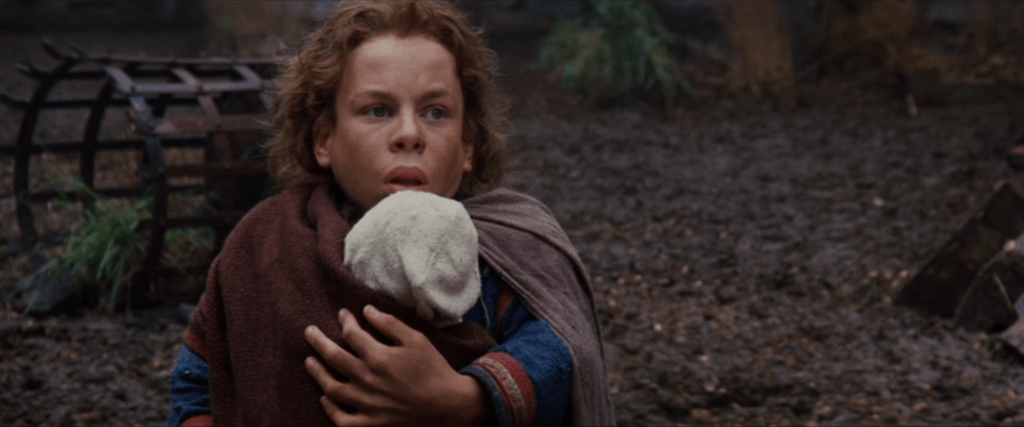
Willow: Disney and Imagine Entertainment.
The Star Wars connection goes into the production aspects, too. Willow stars Warwick Davis, best known as the primary Ewok in Return of the Jedi and several other bit parts throughout the series, as Willow.
Photo by Darya Sannikova on Pexels.com
Val Kilmer’s there, too, and is absolutely delightful as a character that’s pretty much a manic, hyperactive, unwashed barbarian version of Aragorn – in that he’s not the main character but does most the actual fighting.
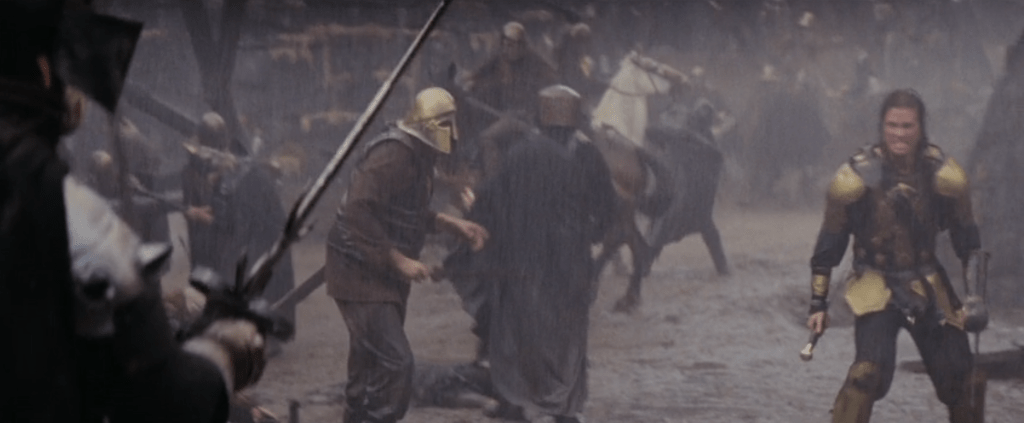
The main quest revolves around trying to save the magic maybe of prophecy to defeat the evil sorceress-queen trying to take over the world. Again, not very novel, but executed well enough and with enough style to hold up to at least one viewing.
I don’t think Willow ever became anything more than a cult classic, but it was at least enough of a cult classic to earn a sequel series in 2022…
…which promptly went over poorly enough that not only was it cancelled after one season , it was also removed from Disney Plus outright and essentially stricken from the face of the Earth.
Which is probably a worse fate than it deserved. There were definitely issues: I remember wishing that the dialogue and the writing were better, because the worldbuilding and art direction were. The world of the original Willow was just straight-up weird — and further evidence that George Lucas is a genius Ideas Guy — and what we’ve seen so far of the series makes it clear they were consciously honouring that.
Which is good.
On the other hand, it felt like they’re running down the Big List of Fantasy Genre Conventions — worst of all, they almost made me use the word “trope”, something for which I would never have forgiven them — and literally checking things off the list as they go.
Tomboy Princess? Check. Wants to go her own way? Check. Forbidden love? Check. Scary, vaguely-defined evil threat to the world? Check. Chosen One’s our only hope? Check.
I get it. There’s only so many ways to tell a story. But there are at least other ways to tell a story than “Exactly the Same Way Everyone Else Has Ever Told That Exact Story.”
Mostly, though, my biggest complaint was that the characters talk and act like people from 2022 North America, rather than people from an unrepentantly Fantasy-y… Fantasy world. It was glaring and distracting enough that I almost tapped out during the first third of the first episode, but I stuck it out and I feel like it did improve by the end of the second episode.
This is exactly the problem I’ve had with Dragon Age recently.
I don’t mind Fantasy characters using modern, real-world speech patterns and expressions on its own, but it needs to fit the established tone and prose of the world. Both Willow and Dragon Age are too unironically Fantasy-y for it to fit.
Though, honestly, even if we transposed all the characters onto a modern setting, I do kinda feel that the dialogue still wouldn’t exactly shine. Even at best, it’s fine, but not really good.
Also, I hated the end credits music they used. It’s incongruously modern and they start playing it way too early in the last scenes before the credits actually start.
Though, on the plus side, I remember being struck by the fact that Warwick Davis is actually a really good actor, and I think this is the first opportunity I’ve ever had to see that, because I’ve only ever seen him as an Ewok — albeit the Ewok — in bit parts, or in the original Willow, where he was 17 years old and didn’t really have much to work with…
Like I’ve already mentioned in passing, my first exposure to it was actually when my Mom read me the junior novelisation when I was a kid.
That novelisation recently got fished out of the box it ended up buried in when we moved 20+ years ago and the more I look at it, they more bewildered I get thinking about it. Not only was it the novelisation of a movie I never even saw as a kid, it’s a British edition of the book that has an explicit ‘Not for Sale in North America’ label on it, that somehow made its way to the suburbs of lovely Ottawa, Ontario, Canada.
Like, wow, that’s almost worth a movie in itself…
And, yet, a young me was all in on the book version of Willow. To the point where, as I recall, I started writing my own book that was literally just Willow with some of the details and names changed. And, in fact, that’s the first thing I can ever remember consciously making the decision to sit down and start writing.

Photo by Tima Miroshnichenko on Pexels.com
So, on behalf of everyone who’s ever enjoyed reading something I’ve written, thanks Ron Howard, George Lucas, Warwick Davis and Company.
ou can follow me on my various social media platforms here:
© Joel Balkovec — Published by Emona Literary Services.

This work is licensed under a Creative Commons Attribution-NonCommercial-NoDerivatives 4.0 International License.
The author prohibits the use of content published on this website for the purposes of training Artificial Intelligence technologies, including but not limited to Large Language Models, without express written permission.
All stories published on this website are works of fiction. Characters are products of the author’s imagination and do not represent any individual, living or dead.
View the Emona Literary Services™ Privacy Policy here.
 Emona Literary Services
Leave a comment